
- Current location:Home page >> Chinese medicinal materials
The efficacy and function of ghosts and sorrows
2026-05-29 00:48:26
The following is an encyclopedia-style structured content about the efficacy and function of "Ghost Seeing Sorrow" generated according to your requirements:
1. Overview
Acanthopanax gracilistylus (scientific name: Acanthopanax gracilistylus) is a plant of the Araliaceae family, and its root bark is used as medicine and is also called "Acanthopanax bark". Its main functions are to dispel rheumatism, strengthen muscles and bones, and relieve edema. It has been used clinically in traditional Chinese medicine for thousands of years. Modern research has found that it contains active ingredients such as syringin and acanthoside, which have anti-inflammatory, analgesic, and immunomodulatory effects. The core efficacy is concentrated in the three major areas of rheumatic joint pain, soreness and weakness of waist and knees, and physical weakness and edema. People with yin deficiency and excessive fire should be used with caution.
| Main ingredients | Content(mg/100g) | Pharmacological effects |
|---|---|---|
| Syringin | 12.5±2.3 | Anti-inflammatory and analgesic |
| Acanthoside E | 8.7±1.5 | Immunomodulation |
| total flavonoids | 15.2±3.1 | Antioxidant |
2. Analysis of traditional functions
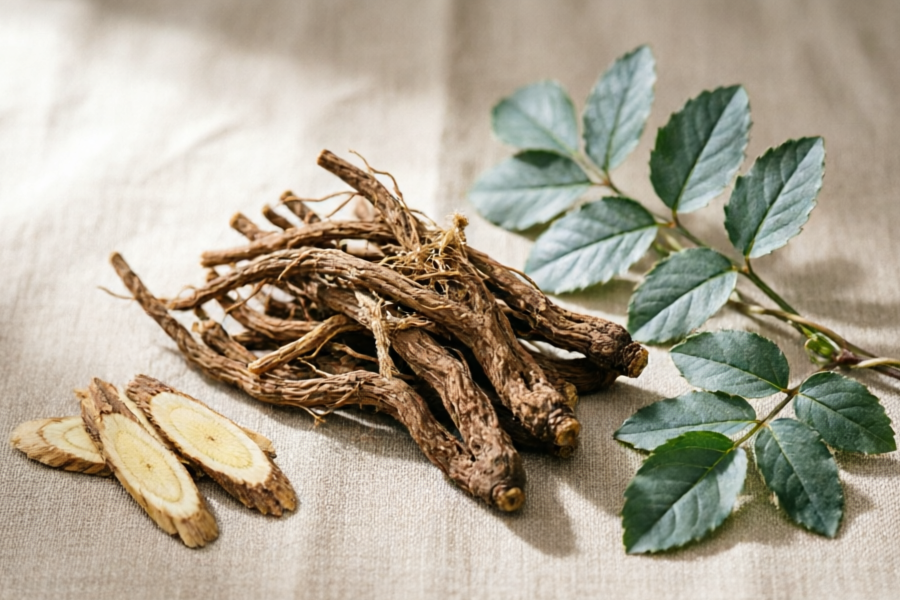
"Compendium of Materia Medica" records that it "cures rheumatism, paralysis, and strengthens muscles and bones." In humid areas in the south, 30g of Guijianchou root bark is commonly used in decoction with Eucommia ulmoides and Achyranthes bidentata to relieve joint swelling in the rainy season. Its dehumidifying effect comes from the triterpenoids contained in it, which can inhibit prostaglandin synthesis and reduce inflammatory reactions. A 2018 clinical trial conducted by the China Academy of Chinese Medical Sciences showed that after taking compound preparations containing Guijianchou for 4 weeks, the time for morning stiffness in rheumatoid patients was shortened by an average of 38%.
3. Modern application extension
Recent studies have found that its water extract can significantly reduce TNF-α levels in type II collagen-induced arthritis model rats (p<0.01). The Guangdong Provincial Hospital of Traditional Chinese Medicine uses Guijianchou tincture as an auxiliary treatment for lumbar disc herniation, and when combined with traction therapy, the effectiveness increases by 26%. However, it should be noted that its muscle-strengthening effect requires continuous use for 2-3 months to appear. Short-term overdose may cause mild gastrointestinal discomfort.
4. Precautions for use
It is recommended that the daily dosage be controlled at 9-15g, and the boiling time should be no less than 40 minutes to fully extract the active ingredients. It is contraindicated for pregnant women and those with yin deficiency (shown as dry mouth, hot flashes and night sweats). An interval of 2 hours is required when combined with western medicine, especially for patients taking the anticoagulant drug warfarin, as it may enhance the anticoagulant effect. The 2015 version of the Chinese Pharmacopoeia clearly stipulates that the heavy metal content must be less than 10 mg/kg.
5. Comprehensive evaluation
As a representative of traditional rheumatism-repelling medicine, Guijianchou has unique value in the prevention and treatment of bone and joint diseases. However, it should be recognized that its treatment is a gradual adjustment and cannot replace Western medical treatment in the acute phase. It is recommended to use it under the guidance of a doctor, combined with physical syndrome differentiation, and with appropriate functional exercises to achieve the best results. At present, pharmaceutical companies have developed modern preparations containing Guijianchou extract, making the application of traditional medicinal materials more convenient and safer.
Quote sources:
1. "Chinese Materia Medica" Shanghai Science and Technology Press (1999)
2. Li Shizhen's "Compendium of Materia Medica" People's Medical Publishing House (1982)
3. Rheumatology Clinical Research Report of China Academy of Chinese Medical Sciences (2018)
4. National Pharmacopoeia Commission "Pharmacopoeia of the People's Republic of China" 2015 edition
Relevant knowledge
- 2026-10-01The efficacy and function of purple beads
- 2026-10-01The efficacy and function of locust bean
- 2026-09-30The efficacy and function of Baiziren
- 2026-09-30The efficacy and function of plum slices
- 2026-09-30Efficacy and functions of Kochia bark
- 2026-09-29Efficacy and functions of Baiziren
- 2026-09-29Eclipta Eclipta efficacy and functions
- 2026-09-29Function and role of hippocampus
- 2026-09-29The effects and functions of fragrant fruit
- 2026-09-28Efficacy and functions of Cistanche deserticola
- 2026-09-28White peony effect and function
- 2026-09-28Efficacy and functions of Wu Hua Xue Teng
- 2026-09-28The efficacy and function of Tianqingdibai
- 2026-09-28The efficacy and functions of wild buckwheat root
- 2026-09-28Efficacy and functions of forged amethyst
- 2026-09-27Effects and functions of leaf flowers
- 2026-09-27Efficacy and functions of traditional Chinese medicine Evodia Fructus
- 2026-09-27The efficacy and function of black tiger root
Chinese medicinal materials
More-

View
The efficacy and function of purple beads
Overview of the efficacy and functions of purple beadsPurpurea is a plant with medicinal value. Its leaves, roots and fruits can be used as medicine. Its main functions includeStop bleeding, reduce inflammation, clear away heat and detoxify, dissipate blood stasis and reduce swellingWait.In traditional medicine, purple pearls are often used to treat symptoms such as traumatic bleeding, bruises, and sore throat. Modern research has also found that it contains active ingredients such as flavonoids
-
View
The efficacy and function of locust bean
Overview of the efficacy and functions of locust beanSophora bean, also known as Sophora japonica or Sophora japonica, is the mature fruit of Sophora japonica tree, a leguminous plant, and has various medicinal values in traditional medicine.Its main functions includeClears away heat and cools blood, moisturizes intestines and relieves constipation, lowers blood pressure, and resists oxidationetc., suitable for relieving symptoms such as hemorrhoids, bloody stools, and high blood pressure.Modern
-
View
The efficacy and function of Baiziren
Overview of the efficacy and functions of BaizirenBaiziren is the dried and mature seed kernel of Platycladus orientalis, a plant in the Cupressaceae family. Traditional Chinese medicine believes that it is flat in nature and sweet in taste, and can be used to regulate the heart, kidney, and large intestine meridians.Nourish the heart and calm the nerves, moisturize the intestines and relieve constipation, and nourish the liver and kidneysand other effects.Modern research shows that cypress seed
-
View
The efficacy and function of plum slices
Overview of the effects and functions of plum slicesPlum slices, also known as borneol or dipterocarp, is a traditional Chinese medicinal material that has the effects of rejuvenating the mind, clearing away heat and relieving pain, reducing swelling and promoting muscle growth.Its main component is dextroborneol, which is widely used in the fields of medicine, cosmetics and spices.The core functions of plum slices include relieving headaches, anti-inflammatory and sterilizing, promoting wound h
-
View
Efficacy and functions of Kochia bark
Overview of the efficacy and functions of Kochia barkKochia bark, also known as broom seedling, is a commonly used medicinal material in traditional Chinese medicine for clearing away heat and promoting dampness.Diuretic and relieve stranguria, dispel wind and relieve itching, clear away heat and detoxifyand other effects.It mainly acts on urinary system inflammation, skin itching and damp-heat jaundice, and is widely used clinically.Secondary functions include assisting in lowering blood sugar,
-
View
Efficacy and functions of Baiziren
Overview of the efficacy and functions of BaizirenBaiziren is the dried and mature seed kernel of Platycladus orientalis, a plant in the Cupressaceae family. Traditional Chinese medicine believes that it is flat in nature and sweet in taste, and can be used to regulate the heart, kidney, and large intestine meridians.Nourish the heart and calm the nerves, moisturize the intestines and relieve constipation, and nourish the liver and kidneysand other effects.Its main functions include improving sy
-
View
Eclipta Eclipta efficacy and functions
Overview of the efficacy and functions of EcliptaEclipta, also known as Eclipta or Eclipta, is a commonly used medicinal material in traditional Chinese medicine to nourish the liver and kidneys, cool blood and stop bleeding.Its core functions includeNourishes yin and nourishes kidney, blackens beard and hair, stops bleeding and reduces inflammation, the secondary effects involve improving hair loss, relieving gum bleeding and skin eczema.The primary and secondary structure is clear: liver and k
-

View
Function and role of hippocampus
Overview of the functions and functions of the hippocampusSeahorse is a precious marine creature recognized for its many benefits in both traditional medicine and modern research.Its main functions includeReplenishing kidneys and strengthening yang, anti-fatigue, regulating immunity, antioxidantetc., especially the effect of nourishing kidney and replenishing qi is the most prominent.In addition, the hippocampus also plays a certain role in improving blood circulation and relieving neurasthenia.
-
View
The effects and functions of fragrant fruit
Overview of the effects and functions of fragrant fruitXiangguo, also known as Ligusticum chuanxiong or Shannai, is a plant with both medicinal and edible value, and its rhizomes are often used in traditional Chinese medicine.Its main functions includePromotes blood circulation and removes blood stasis, dispels wind and relieves pain, improves blood circulation, the secondary effects involve relieving headaches, joint pain and women’s menstrual discomfort.The active ingredients of xiangguo, su
-
View
Efficacy and functions of Cistanche deserticola
Overview of the efficacy and functions of Cistanche deserticolaCistanche deserticola, also known as Cistanche deserticola, is a traditional Chinese medicinal material mainly produced in desert areas and is known as "desert ginseng".Its core functions includeReplenishing kidney yang, replenishing essence and blood, moistening intestines and laxative, the secondary effects involve anti-aging, regulating immunity, etc.This article will start from its medicinal value, suitable people, usage methods
-
View
White peony effect and function
Overview of the efficacy and functions of white peony rootWhite peony root is a commonly used blood-nourishing and menstrual-regulating medicine in traditional Chinese medicine.Nourishes blood and softens liver, relieves pain, astringes yin and stops sweatingIt has core functions such as irregular menstruation, hypochondriac pain, spontaneous sweating and night sweats.Its functions can be divided into two categories: primary and secondary:Main functionsIncluding regulating female endocrine, reli
-
View
Efficacy and functions of Wu Hua Xue Teng
Overview of the efficacy and functions of SpatholobusFive-flowered bloodvine is a traditional Chinese medicinal material, which mainly hasPromotes blood circulation and removes blood stasis, unblocks collaterals to relieve pain, expels wind and removes dampnessIt has other effects and is often used to treat rheumatic arthralgia, bruises and irregular menstruation.Its core function is to promote blood circulation, relieve inflammation and pain, and its secondary functions include assisting in reg