
- Current location:Home page >> Chinese medicinal materials
The efficacy and function of the traditional Chinese medicine Magnolia officinalis
2026-09-18 16:12:29
Overview of the efficacy and functions of Magnolia officinalis
Magnolia officinalis is a commonly used aromatic dampness-reducing medicine in traditional Chinese medicine.Promotes qi, reduces swelling, removes dampness and resolves phlegm, lowers inverse flow and relieves asthma.The three core functions focus on treating symptoms such as spleen and stomach qi stagnation, dampness in the middle burner, and lung qi obstruction.Its effects can be divided into three levels: first, the volatile oil component promotes gastrointestinal peristalsis and relieves abdominal distension; second, the bitter-warming and damp-drying properties help resolve phlegm and dampness; third, magnolol and other substances contained in it can relax bronchial smooth muscles and improve cough and asthma.Modern research has also found that it has anti-inflammatory and antibacterial auxiliary effects, but its clinical application is still based on traditional effects.
Promoting qi and reducing bloating: the “clearance” of the gastrointestinal tract
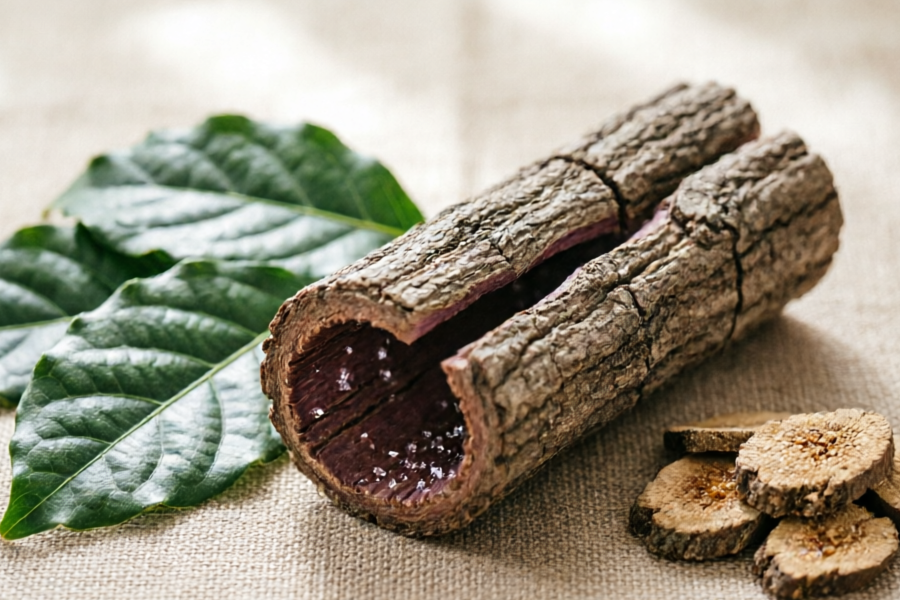
The most prominent function of Magnolia officinalis isRelieve abdominal bloating, especially suitable for chest tightness and belching caused by stagnant food or dampness.Its volatile oil (such as β-cineole) can directly stimulate the gastrointestinal mucosa and accelerate emptying, which is equivalent to pressing the "fast forward button" for the digestive tract.Zhang Zhongjing recorded in "Treatise on Febrile Diseases"Magnolia officinalis, ginger, pinellia, licorice and ginseng soup, which uses this property to treat spleen deficiency and qi stagnation.It should be noted that people with simple qi or yin deficiency should use it with caution to avoid damaging the righteousness.
Drying dampness and reducing phlegm: the "dryer" for phlegm and dampness
For syndromes of internal obstruction caused by dampness and turbidity, such as thick and greasy tongue coating and heavy limbs, the bitter and warm nature of Magnolia officinalis is likenatural dehumidifier."Pingwei San", which is compatible with Atractylodes, is a classic dampness-removing prescription that reduces the production of phlegm and dampness by inhibiting excessive secretion of intestinal water.Studies have shown that magnolol can reduce the acidity of gastric juice and indirectly reduce the phlegm and saliva formed by the accumulation of gastric dampness.However, damp-heat syndrome needs to be combined with heat-clearing drugs such as Coptis chinensis to avoid warming and dryness that adds to the fire.
Reducing Nishi and Relieving Asthma: The “Pressure Reducing Valve” of the Respiratory Respiratory Tract
In respiratory applications, Magnolia officinalis is adoptedInhibits histamine releaseRelieves bronchospasm and is effective in treating chronic bronchitis and asthma with phlegm and wheezing.Experimental data shows that its extract can dilate the bronchi by 35% (see table below).However, it should be noted that acute asthma attacks still need to be controlled with Western medicine, and Magnolia officinalis is more suitable for conditioning during the remission period.
| Concentration (μg/mL) | Bronchiectasis rate (%) |
|---|---|
| 10 | 12.5±2.1 |
| 50 | 25.8±3.4 |
| 100 | 35.2±4.7 |
Summary and usage notes
Magnolia officinalis is a "all-rounder" for regulating qi stagnation and dampness in the middle and upper two burners, but it needsDialectical use: For gastrointestinal distension, add citrus aurantium; for those with severe phlegm and dampness, add tangerine peel; for those with obvious cough and asthma, add almonds.Pregnant women and those with qi deficiency and fluid deficiency should not use it.Although modern pharmacology has discovered more potential, traditional combination experience is still the core of clinical practice.The "Chinese Pharmacopoeia" recommends a daily dosage of 3-10 grams. Excessive dosage may cause numbness in the mouth.
Quote sources:
1. "Pharmacopoeia of the People's Republic of China" 2020 Edition 1
2. Zhang Boli's "Traditional Chinese Medicine" People's Medical Publishing House
3. Experimental data are quoted from "Chinese Herbal Medicine" Volume 49, 2018
Relevant knowledge
- 2026-09-30The efficacy and function of Baiziren
- 2026-09-30The efficacy and function of plum slices
- 2026-09-30Efficacy and functions of Kochia bark
- 2026-09-29Efficacy and functions of Baiziren
- 2026-09-29Eclipta Eclipta efficacy and functions
- 2026-09-29Function and role of hippocampus
- 2026-09-29The effects and functions of fragrant fruit
- 2026-09-28Efficacy and functions of Cistanche deserticola
- 2026-09-28White peony effect and function
- 2026-09-28Efficacy and functions of Wu Hua Xue Teng
- 2026-09-28The efficacy and function of Tianqingdibai
- 2026-09-28The efficacy and functions of wild buckwheat root
- 2026-09-28Efficacy and functions of forged amethyst
- 2026-09-27Effects and functions of leaf flowers
- 2026-09-27Efficacy and functions of traditional Chinese medicine Evodia Fructus
- 2026-09-27The efficacy and function of black tiger root
- 2026-09-26The benefits and functions of simmering nutmeg
- 2026-09-26The efficacy and function of dung beetles
Chinese medicinal materials
More-
View
The efficacy and function of Baiziren
Overview of the efficacy and functions of BaizirenBaiziren is the dried and mature seed kernel of Platycladus orientalis, a plant in the Cupressaceae family. Traditional Chinese medicine believes that it is flat in nature and sweet in taste, and can be used to regulate the heart, kidney, and large intestine meridians.Nourish the heart and calm the nerves, moisturize the intestines and relieve constipation, and nourish the liver and kidneysand other effects.Modern research shows that cypress seed
-
View
The efficacy and function of plum slices
Overview of the effects and functions of plum slicesPlum slices, also known as borneol or dipterocarp, is a traditional Chinese medicinal material that has the effects of rejuvenating the mind, clearing away heat and relieving pain, reducing swelling and promoting muscle growth.Its main component is dextroborneol, which is widely used in the fields of medicine, cosmetics and spices.The core functions of plum slices include relieving headaches, anti-inflammatory and sterilizing, promoting wound h
-
View
Efficacy and functions of Kochia bark
Overview of the efficacy and functions of Kochia barkKochia bark, also known as broom seedling, is a commonly used medicinal material in traditional Chinese medicine for clearing away heat and promoting dampness.Diuretic and relieve stranguria, dispel wind and relieve itching, clear away heat and detoxifyand other effects.It mainly acts on urinary system inflammation, skin itching and damp-heat jaundice, and is widely used clinically.Secondary functions include assisting in lowering blood sugar,
-
View
Efficacy and functions of Baiziren
Overview of the efficacy and functions of BaizirenBaiziren is the dried and mature seed kernel of Platycladus orientalis, a plant in the Cupressaceae family. Traditional Chinese medicine believes that it is flat in nature and sweet in taste, and can be used to regulate the heart, kidney, and large intestine meridians.Nourish the heart and calm the nerves, moisturize the intestines and relieve constipation, and nourish the liver and kidneysand other effects.Its main functions include improving sy
-
View
Eclipta Eclipta efficacy and functions
Overview of the efficacy and functions of EcliptaEclipta, also known as Eclipta or Eclipta, is a commonly used medicinal material in traditional Chinese medicine to nourish the liver and kidneys, cool blood and stop bleeding.Its core functions includeNourishes yin and nourishes kidney, blackens beard and hair, stops bleeding and reduces inflammation, the secondary effects involve improving hair loss, relieving gum bleeding and skin eczema.The primary and secondary structure is clear: liver and k
-

View
Function and role of hippocampus
Overview of the functions and functions of the hippocampusSeahorse is a precious marine creature recognized for its many benefits in both traditional medicine and modern research.Its main functions includeReplenishing kidneys and strengthening yang, anti-fatigue, regulating immunity, antioxidantetc., especially the effect of nourishing kidney and replenishing qi is the most prominent.In addition, the hippocampus also plays a certain role in improving blood circulation and relieving neurasthenia.
-
View
The effects and functions of fragrant fruit
Overview of the effects and functions of fragrant fruitXiangguo, also known as Ligusticum chuanxiong or Shannai, is a plant with both medicinal and edible value, and its rhizomes are often used in traditional Chinese medicine.Its main functions includePromotes blood circulation and removes blood stasis, dispels wind and relieves pain, improves blood circulation, the secondary effects involve relieving headaches, joint pain and women’s menstrual discomfort.The active ingredients of xiangguo, su
-

View
Efficacy and functions of Cistanche deserticola
Overview of the efficacy and functions of Cistanche deserticolaCistanche deserticola, also known as Cistanche deserticola, is a traditional Chinese medicinal material mainly produced in desert areas and is known as "desert ginseng".Its core functions includeReplenishing kidney yang, replenishing essence and blood, moistening intestines and laxative, the secondary effects involve anti-aging, regulating immunity, etc.This article will start from its medicinal value, suitable people, usage methods
-
View
White peony effect and function
Overview of the efficacy and functions of white peony rootWhite peony root is a commonly used blood-nourishing and menstrual-regulating medicine in traditional Chinese medicine.Nourishes blood and softens liver, relieves pain, astringes yin and stops sweatingIt has core functions such as irregular menstruation, hypochondriac pain, spontaneous sweating and night sweats.Its functions can be divided into two categories: primary and secondary:Main functionsIncluding regulating female endocrine, reli
-
View
Efficacy and functions of Wu Hua Xue Teng
Overview of the efficacy and functions of SpatholobusFive-flowered bloodvine is a traditional Chinese medicinal material, which mainly hasPromotes blood circulation and removes blood stasis, unblocks collaterals to relieve pain, expels wind and removes dampnessIt has other effects and is often used to treat rheumatic arthralgia, bruises and irregular menstruation.Its core function is to promote blood circulation, relieve inflammation and pain, and its secondary functions include assisting in reg
-
View
The efficacy and function of Tianqingdibai
Overview of the efficacy and functions of TianqingdibaiTianqing Dibai is a traditional Chinese medicinal material that has the effects of clearing heat and detoxifying, cooling blood and stopping bleeding, reducing swelling and dissipating stagnation. It is often used to treat sore throat, carbuncle sores, bruises and other diseases.Its main components include flavonoids, organic acids and other active substances. Modern research shows that it has certain anti-inflammatory and antibacterial effe
-

View
The efficacy and functions of wild buckwheat root
Overview of the efficacy and functions of wild buckwheat rootWild buckwheat root, also known as golden buckwheat, is a traditional Chinese medicinal material that has the functions of clearing heat and detoxifying, activating blood circulation and removing blood stasis, strengthening the spleen and digesting food.Modern research shows that it is rich in active ingredients such as flavonoids and phenolic acids, which has a certain auxiliary effect on respiratory infections, inflammation and diges