
- Current location:Home page >> Chinese medicinal materials
The efficacy and function of salt anemarrhena
2026-05-25 13:57:34
Overview of the efficacy and functions of Salt Anemarrhena
Anemarrhena anemarrhena is a Chinese medicinal material prepared by roasting Anemarrhena with salt. It has both the heat-clearing and purging effect of Anemarrhena and the enhanced effect of nourishing yin and reducing fire after being roasted with salt. Its core functions includeClear away heat and relieve irritability, nourish yin and moisturize dryness, produce body fluid and quench thirst, suitable for diseases such as lung and stomach dryness and heat, yin deficiency and excessive fire. Its secondary functions are to assist in lowering blood sugar, anti-inflammatory and antibacterial effects. In terms of content structure, the priority is clear: it first explains its traditional medicinal value, then extends to modern research evidence, and finally reminds you of precautions to ensure the scientific and practical content.
The dual effects of clearing away heat and relieving irritability and nourishing yin and moistening dryness
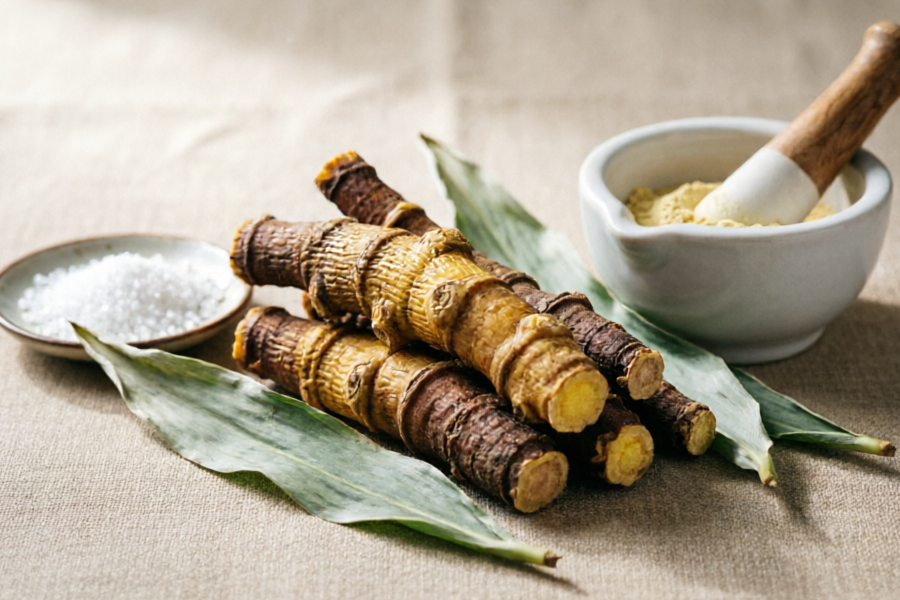
salt anemarrhenaClear away heat and relieve troublesThe properties are derived from its active ingredient Anemarrhena Saponin, which can relieve symptoms such as high fever, irritability, thirst, and dry throat. It is especially suitable for the treatment of summer heat or late-stage febrile diseases. The salt roasting process strengthens itsNourishing yin and moisturizing drynessFunction, it can significantly improve dry cough, night sweats, bone steaming and hot flashes caused by lung and kidney yin deficiency. For example, "Compendium of Materia Medica" records that Anemarrhena "moistens kidney dryness and nourishes yin at the bottom, clears the lungs and purges fire with gold", and this effect is more significant after being salted.
Producing body fluids and quenching thirst and the extended value of modern research
salt anemarrhenaProduce fluid and quench thirstIts role has attracted much attention in the auxiliary treatment of diabetes. Research shows that its polysaccharide content can promote insulin secretion and help regulate blood sugar (see table below). In addition, in vitro experiments show that it has an inhibitory effect on common pathogenic bacteria such as Staphylococcus aureus, but clinical application still requires medical advice and cannot replace antibiotics.
| research indicators | result | References |
|---|---|---|
| hypoglycemic effect | Mouse model blood sugar decreased by 12%-15% | "Chinese Herbal Medicine" 2020 |
| anti-inflammatory activity | Inhibits TNF-α release by 37% | "Journal of Pharmaceutical Sciences" 2019 |
Precautions for use and reasonable compatibility
Salt Anemarrhena is cold in nature, and those with spleen and stomach deficiency need to be combined with Atractylodes Macrocephala and dried ginger to neutralize the medicinal properties; long-term use may affect digestive function, so it is recommended to use it intermittently. Classic prescriptions such asZhibai Dihuang PillsAmong them, Anemarrhena salt is often used together with Phellodendron cypress and Rehmannia glutinosa to enhance the effect of nourishing yin and reducing fire. Zhang Jingyue, a doctor in the Ming Dynasty, once said: "Anemarrhena's moisturizing properties are particularly nourishing and nourishing due to salt." However, he emphasized the need for syndrome differentiation and treatment.
Summary: The combination of traditional wisdom and modern science
As a model of traditional Chinese medicine processing, Salt Anemarrhena not only inherits the heat-clearing essence of Anemarrhena, but also sublimates the yin-nourishing effect through salt roasting. Its application needs to balance traditional experience and modern research: it has significant effects on dryness and heat syndrome, but the risk of cold and stomach damage needs to be avoided. When used properly, it is not only the nemesis of "high burnt fire and lower burnt dryness", but also provides a natural choice for the treatment of chronic diseases.
Quote sources:
1. "Compendium of Materia Medica" Li Shizhen (Ming Dynasty)
2. "The Complete Book of Jingyue"·Zhang Jingyue (Ming Dynasty)
3. "Chinese Herbal Medicine" Issue 8, 2020·Chinese Academy of Medical Sciences
4. "Acta Pharmaceutical Sciences" Issue 5, 2019·Chinese Pharmaceutical Association
Relevant knowledge
- 2026-10-01The efficacy and function of purple beads
- 2026-10-01The efficacy and function of locust bean
- 2026-09-30The efficacy and function of Baiziren
- 2026-09-30The efficacy and function of plum slices
- 2026-09-30Efficacy and functions of Kochia bark
- 2026-09-29Efficacy and functions of Baiziren
- 2026-09-29Eclipta Eclipta efficacy and functions
- 2026-09-29Function and role of hippocampus
- 2026-09-29The effects and functions of fragrant fruit
- 2026-09-28Efficacy and functions of Cistanche deserticola
- 2026-09-28White peony effect and function
- 2026-09-28Efficacy and functions of Wu Hua Xue Teng
- 2026-09-28The efficacy and function of Tianqingdibai
- 2026-09-28The efficacy and functions of wild buckwheat root
- 2026-09-28Efficacy and functions of forged amethyst
- 2026-09-27Effects and functions of leaf flowers
- 2026-09-27Efficacy and functions of traditional Chinese medicine Evodia Fructus
- 2026-09-27The efficacy and function of black tiger root
Chinese medicinal materials
More-
View
The efficacy and function of purple beads
Overview of the efficacy and functions of purple beadsPurpurea is a plant with medicinal value. Its leaves, roots and fruits can be used as medicine. Its main functions includeStop bleeding, reduce inflammation, clear away heat and detoxify, dissipate blood stasis and reduce swellingWait.In traditional medicine, purple pearls are often used to treat symptoms such as traumatic bleeding, bruises, and sore throat. Modern research has also found that it contains active ingredients such as flavonoids
-
View
The efficacy and function of locust bean
Overview of the efficacy and functions of locust beanSophora bean, also known as Sophora japonica or Sophora japonica, is the mature fruit of Sophora japonica tree, a leguminous plant, and has various medicinal values in traditional medicine.Its main functions includeClears away heat and cools blood, moisturizes intestines and relieves constipation, lowers blood pressure, and resists oxidationetc., suitable for relieving symptoms such as hemorrhoids, bloody stools, and high blood pressure.Modern
-

View
The efficacy and function of Baiziren
Overview of the efficacy and functions of BaizirenBaiziren is the dried and mature seed kernel of Platycladus orientalis, a plant in the Cupressaceae family. Traditional Chinese medicine believes that it is flat in nature and sweet in taste, and can be used to regulate the heart, kidney, and large intestine meridians.Nourish the heart and calm the nerves, moisturize the intestines and relieve constipation, and nourish the liver and kidneysand other effects.Modern research shows that cypress seed
-

View
The efficacy and function of plum slices
Overview of the effects and functions of plum slicesPlum slices, also known as borneol or dipterocarp, is a traditional Chinese medicinal material that has the effects of rejuvenating the mind, clearing away heat and relieving pain, reducing swelling and promoting muscle growth.Its main component is dextroborneol, which is widely used in the fields of medicine, cosmetics and spices.The core functions of plum slices include relieving headaches, anti-inflammatory and sterilizing, promoting wound h
-

View
Efficacy and functions of Kochia bark
Overview of the efficacy and functions of Kochia barkKochia bark, also known as broom seedling, is a commonly used medicinal material in traditional Chinese medicine for clearing away heat and promoting dampness.Diuretic and relieve stranguria, dispel wind and relieve itching, clear away heat and detoxifyand other effects.It mainly acts on urinary system inflammation, skin itching and damp-heat jaundice, and is widely used clinically.Secondary functions include assisting in lowering blood sugar,
-

View
Efficacy and functions of Baiziren
Overview of the efficacy and functions of BaizirenBaiziren is the dried and mature seed kernel of Platycladus orientalis, a plant in the Cupressaceae family. Traditional Chinese medicine believes that it is flat in nature and sweet in taste, and can be used to regulate the heart, kidney, and large intestine meridians.Nourish the heart and calm the nerves, moisturize the intestines and relieve constipation, and nourish the liver and kidneysand other effects.Its main functions include improving sy
-

View
Eclipta Eclipta efficacy and functions
Overview of the efficacy and functions of EcliptaEclipta, also known as Eclipta or Eclipta, is a commonly used medicinal material in traditional Chinese medicine to nourish the liver and kidneys, cool blood and stop bleeding.Its core functions includeNourishes yin and nourishes kidney, blackens beard and hair, stops bleeding and reduces inflammation, the secondary effects involve improving hair loss, relieving gum bleeding and skin eczema.The primary and secondary structure is clear: liver and k
-

View
Function and role of hippocampus
Overview of the functions and functions of the hippocampusSeahorse is a precious marine creature recognized for its many benefits in both traditional medicine and modern research.Its main functions includeReplenishing kidneys and strengthening yang, anti-fatigue, regulating immunity, antioxidantetc., especially the effect of nourishing kidney and replenishing qi is the most prominent.In addition, the hippocampus also plays a certain role in improving blood circulation and relieving neurasthenia.
-

View
The effects and functions of fragrant fruit
Overview of the effects and functions of fragrant fruitXiangguo, also known as Ligusticum chuanxiong or Shannai, is a plant with both medicinal and edible value, and its rhizomes are often used in traditional Chinese medicine.Its main functions includePromotes blood circulation and removes blood stasis, dispels wind and relieves pain, improves blood circulation, the secondary effects involve relieving headaches, joint pain and women’s menstrual discomfort.The active ingredients of xiangguo, su
-

View
Efficacy and functions of Cistanche deserticola
Overview of the efficacy and functions of Cistanche deserticolaCistanche deserticola, also known as Cistanche deserticola, is a traditional Chinese medicinal material mainly produced in desert areas and is known as "desert ginseng".Its core functions includeReplenishing kidney yang, replenishing essence and blood, moistening intestines and laxative, the secondary effects involve anti-aging, regulating immunity, etc.This article will start from its medicinal value, suitable people, usage methods
-

View
White peony effect and function
Overview of the efficacy and functions of white peony rootWhite peony root is a commonly used blood-nourishing and menstrual-regulating medicine in traditional Chinese medicine.Nourishes blood and softens liver, relieves pain, astringes yin and stops sweatingIt has core functions such as irregular menstruation, hypochondriac pain, spontaneous sweating and night sweats.Its functions can be divided into two categories: primary and secondary:Main functionsIncluding regulating female endocrine, reli
-

View
Efficacy and functions of Wu Hua Xue Teng
Overview of the efficacy and functions of SpatholobusFive-flowered bloodvine is a traditional Chinese medicinal material, which mainly hasPromotes blood circulation and removes blood stasis, unblocks collaterals to relieve pain, expels wind and removes dampnessIt has other effects and is often used to treat rheumatic arthralgia, bruises and irregular menstruation.Its core function is to promote blood circulation, relieve inflammation and pain, and its secondary functions include assisting in reg