
- Current location:Home page >> health information
How to read a prescription correctly?
2026-07-08 16:38:36
How to read a prescription correctly? Master key information to ensure medication safety
Correct reading of prescriptions is an important part of ensuring medication safety and requires special attentionPatient information, drug name, usage and dosage, doctor’s signature and dateand other core content. Prescriptions are usually divided into two forms: handwritten and electronic. Pay attention to the clarity of the writing or the standardization of the system. Secondary information includes prescription number, diagnosis results (not mandatory in some countries) and drug specifications. Mastering these key points can avoid medication errors caused by misunderstandings, which is especially critical for patients with chronic diseases or those who require combined medication.
Paragraph 1: Analysis of core elements of prescription

beginning with prescriptionPatient name, age, genderIt is the primary information for identity verification and must be consistent with the person. The name of the drug needs to distinguish between the generic name (such as "Amoxicillin") and the trade name (such as "Amoxicillin") to avoid duplication of drugs. The dosage unit (mg/mL) and frequency of administration (how many times a day) are often presented with Latin abbreviations, such as "qd" (once a day), "bid" (twice a day). The doctor's signature and institutional seal guarantee the legitimacy of the prescription. Prescriptions without signatures may be invalid. You also need to pay attention to the red border of special prescriptions (such as narcotic drugs) or the encrypted logo of electronic prescriptions.
Paragraph 2: Interpretation of confusing symbols and professional terms
Commonly prescribed"Sig" markFollowed by medication instructions, such as "1# po tid" means "take one tablet orally three times a day." Terms such as "gtt" (drops) and "prn" (when necessary) need to be understood accurately. In number writing, "1.0" and "1" may be misread as "10", which needs to be judged based on the context. Some prescriptions will be labeled with the purpose of medication (such as "lowering blood pressure") or contraindications (such as "contraindicated in pregnancy"). This additional information is crucial to medication safety. If you encounter ambiguous content, you should contact your pharmacist or doctor immediately for confirmation and do not make guesses on your own.
Paragraph 3: Precautions for special groups and special dosage forms
Children’s prescriptions need to be checkedBody weight converted dose, such as "15mg/kg/d" means 15 mg per kilogram of body weight per day. Special dosage forms such as extended-release tablets (labeled CR/SR) and enteric-coated tablets (EC) cannot be taken in separate pieces. Biological preparations such as insulin need to pay attention to the storage temperature, and injections need to confirm whether they contain matching solvents. Pregnant and lactating women need to pay special attention to drug safety classification (such as FDA's A/B/C/D/X categories). When polypharmacy is used in the elderly, the risk of drug interactions between different prescriptions should be examined.
Paragraph 4: Complete process of prescription execution and archiving
Check when taking medicineDrug appearance and expiry dateIs it consistent with the prescription? Medication labels available from pharmacies may contain additional warnings (such as "store away from light"). Electronic prescriptions need to be collected by scanning the code or entering the verification code, and paper prescriptions must be kept properly for future reference. Long-term prescriptions for chronic diseases should record medication reactions and provide feedback to the doctor during follow-up visits. The disposal of remaining medicines must follow medical waste regulations. In particular, antibiotics and specially managed medicines must not be discarded at will.
Summary: Build a complete cognitive system for prescription reading
From receipt of prescription to completion of medication, patients should establish"Check-Confirm-Execute-Feedback"closed-loop management. Electronic instructions can be obtained by scanning drug barcodes with a smartphone, but they are not a substitute for professional medical advice. Keeping copies of prescriptions can help with medical care in emergencies. Medical institutions should also lower the reading threshold by simplifying prescription templates and adding patient education materials to jointly improve medication safety.
| Comparison table of common prescription abbreviations | meaning |
|---|---|
| qd | 1 time a day |
| bid | 2 times a day |
| tid | 3 times a day |
| qid | 4 times a day |
| po | Oral |
| prn | when necessary |
Quote sources:
1. WHO Guide to Good Prescribing
2. National Health Commission's "Prescription Management Measures"
3. U.S. FDA "Prescription Drug Labeling Standards" (2016 Edition)
4. Common prescription drug manufacturers: Pfizer (amoxicillin), Novartis (Diovan), Bayer (aspirin enteric-coated tablets)
Relevant knowledge
- 2026-10-01How do women take care of their skin scientifically?
- 2026-10-01What is female beauty?
- 2026-09-30How can women supplement calcium scientifically?
- 2026-09-30What is calcium supplementation?
- 2026-09-30How often should bone density checks be done?
- 2026-09-29How to prevent osteoporosis?
- 2026-09-29Why are women prone to osteoporosis?
- 2026-09-29What is osteoporosis?
- 2026-09-28Is hormone replacement therapy safe?
- 2026-09-28What is hormone replacement therapy?
- 2026-09-28How to manage menopause?
- 2026-09-28What are the symptoms of menopause?
- 2026-09-28What is menopause?
- 2026-09-28What does a postpartum review include?
- 2026-09-27What is a postpartum review?
- 2026-09-27Is pelvic floor muscle repair necessary?
- 2026-09-27What is postpartum pelvic floor muscle repair?
- 2026-09-27How to lose weight scientifically after giving birth?
Chinese medicinal materials
More-

View
The efficacy and function of purple beads
Overview of the efficacy and functions of purple beadsPurpurea is a plant with medicinal value. Its leaves, roots and fruits can be used as medicine. Its main functions includeStop bleeding, reduce inflammation, clear away heat and detoxify, dissipate blood stasis and reduce swellingWait.In traditional medicine, purple pearls are often used to treat symptoms such as traumatic bleeding, bruises, and sore throat. Modern research has also found that it contains active ingredients such as flavonoids
-

View
The efficacy and function of locust bean
Overview of the efficacy and functions of locust beanSophora bean, also known as Sophora japonica or Sophora japonica, is the mature fruit of Sophora japonica tree, a leguminous plant, and has various medicinal values in traditional medicine.Its main functions includeClears away heat and cools blood, moisturizes intestines and relieves constipation, lowers blood pressure, and resists oxidationetc., suitable for relieving symptoms such as hemorrhoids, bloody stools, and high blood pressure.Modern
-
View
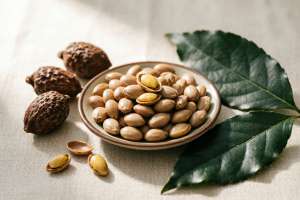
The efficacy and function of Baiziren
Overview of the efficacy and functions of BaizirenBaiziren is the dried and mature seed kernel of Platycladus orientalis, a plant in the Cupressaceae family. Traditional Chinese medicine believes that it is flat in nature and sweet in taste, and can be used to regulate the heart, kidney, and large intestine meridians.Nourish the heart and calm the nerves, moisturize the intestines and relieve constipation, and nourish the liver and kidneysand other effects.Modern research shows that cypress seed
-
View
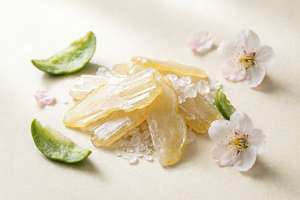
The efficacy and function of plum slices
Overview of the effects and functions of plum slicesPlum slices, also known as borneol or dipterocarp, is a traditional Chinese medicinal material that has the effects of rejuvenating the mind, clearing away heat and relieving pain, reducing swelling and promoting muscle growth.Its main component is dextroborneol, which is widely used in the fields of medicine, cosmetics and spices.The core functions of plum slices include relieving headaches, anti-inflammatory and sterilizing, promoting wound h
-
View
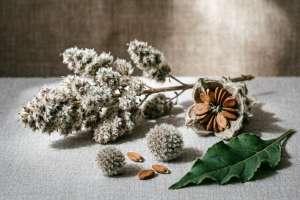
Efficacy and functions of Kochia bark
Overview of the efficacy and functions of Kochia barkKochia bark, also known as broom seedling, is a commonly used medicinal material in traditional Chinese medicine for clearing away heat and promoting dampness.Diuretic and relieve stranguria, dispel wind and relieve itching, clear away heat and detoxifyand other effects.It mainly acts on urinary system inflammation, skin itching and damp-heat jaundice, and is widely used clinically.Secondary functions include assisting in lowering blood sugar,
-
View
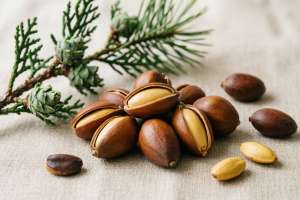
Efficacy and functions of Baiziren
Overview of the efficacy and functions of BaizirenBaiziren is the dried and mature seed kernel of Platycladus orientalis, a plant in the Cupressaceae family. Traditional Chinese medicine believes that it is flat in nature and sweet in taste, and can be used to regulate the heart, kidney, and large intestine meridians.Nourish the heart and calm the nerves, moisturize the intestines and relieve constipation, and nourish the liver and kidneysand other effects.Its main functions include improving sy
-

View
Eclipta Eclipta efficacy and functions
Overview of the efficacy and functions of EcliptaEclipta, also known as Eclipta or Eclipta, is a commonly used medicinal material in traditional Chinese medicine to nourish the liver and kidneys, cool blood and stop bleeding.Its core functions includeNourishes yin and nourishes kidney, blackens beard and hair, stops bleeding and reduces inflammation, the secondary effects involve improving hair loss, relieving gum bleeding and skin eczema.The primary and secondary structure is clear: liver and k
-

View
Function and role of hippocampus
Overview of the functions and functions of the hippocampusSeahorse is a precious marine creature recognized for its many benefits in both traditional medicine and modern research.Its main functions includeReplenishing kidneys and strengthening yang, anti-fatigue, regulating immunity, antioxidantetc., especially the effect of nourishing kidney and replenishing qi is the most prominent.In addition, the hippocampus also plays a certain role in improving blood circulation and relieving neurasthenia.
-
View
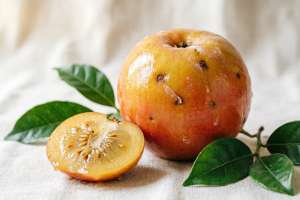
The effects and functions of fragrant fruit
Overview of the effects and functions of fragrant fruitXiangguo, also known as Ligusticum chuanxiong or Shannai, is a plant with both medicinal and edible value, and its rhizomes are often used in traditional Chinese medicine.Its main functions includePromotes blood circulation and removes blood stasis, dispels wind and relieves pain, improves blood circulation, the secondary effects involve relieving headaches, joint pain and women’s menstrual discomfort.The active ingredients of xiangguo, su
-

View
Efficacy and functions of Cistanche deserticola
Overview of the efficacy and functions of Cistanche deserticolaCistanche deserticola, also known as Cistanche deserticola, is a traditional Chinese medicinal material mainly produced in desert areas and is known as "desert ginseng".Its core functions includeReplenishing kidney yang, replenishing essence and blood, moistening intestines and laxative, the secondary effects involve anti-aging, regulating immunity, etc.This article will start from its medicinal value, suitable people, usage methods
-
View
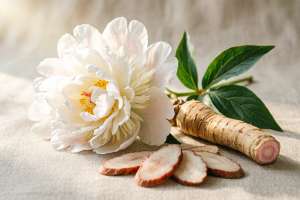
White peony effect and function
Overview of the efficacy and functions of white peony rootWhite peony root is a commonly used blood-nourishing and menstrual-regulating medicine in traditional Chinese medicine.Nourishes blood and softens liver, relieves pain, astringes yin and stops sweatingIt has core functions such as irregular menstruation, hypochondriac pain, spontaneous sweating and night sweats.Its functions can be divided into two categories: primary and secondary:Main functionsIncluding regulating female endocrine, reli
-
View
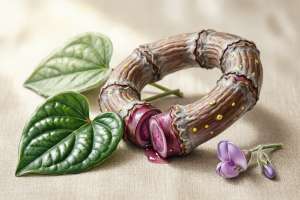
Efficacy and functions of Wu Hua Xue Teng
Overview of the efficacy and functions of SpatholobusFive-flowered bloodvine is a traditional Chinese medicinal material, which mainly hasPromotes blood circulation and removes blood stasis, unblocks collaterals to relieve pain, expels wind and removes dampnessIt has other effects and is often used to treat rheumatic arthralgia, bruises and irregular menstruation.Its core function is to promote blood circulation, relieve inflammation and pain, and its secondary functions include assisting in reg