
- Current location:Home page >> health information
Why is exercise rehabilitation important?
2026-03-12 17:29:32
The importance of sports rehabilitation: the core of scientific recovery and functional reconstruction
First paragraph: content overview
Sports rehabilitation is an important field at the intersection of modern medicine and sports science. Its core value lies in helping patients restore physical functions, prevent secondary injuries, and improve sports performance through systematic training. The main content is divided into three levels:basic level(Physiological repair after injury),functional level(Joint range of motion and muscle strength reconstruction),high level(Movement pattern optimization and psychological adaptation). Among them, functional recovery is the top priority, accounting for more than 60% of the overall rehabilitation process.
Paragraph 2: The basic role of physiological repair
Sports rehabilitation first addresses inflammation control and tissue repair after acute injury. Research shows that scientifically designed rehabilitation programs can increase soft tissue healing efficiency by 30%-40% (data from the American College of Sports Medicine). For example, alternating hot and cold therapy combined with low-intensity isometric contractions after knee joint surgery can effectively reduce swelling and maintain muscle activity. At this stage, the "protection-rest-ice-compression-elevation" (PRICE principle) must be strictly followed to avoid premature weight bearing, which may lead to delayed healing.

Paragraph 3: Key Technologies for Functional Recovery
When basic healing is complete, kinetic chain function needs to be reestablished through progressive training. Swiss ball training, suspension systems (such as Redcord) activate deep stabilizing muscles, and hydrotherapy pools provide safe training in a low-gravity environment. The famous rehabilitation expert Timothy Gabbett proposed the "Load Management Pyramid": the weekly training volume should not increase by more than 10% to avoid excessive fatigue. Data show that standardized functional training can reduce the recurrence rate of ankle sprains from 70% to 15% (British Journal of Sports Medicine).
Paragraph 4: Sports Performance and Mental Reconstruction
The advanced rehabilitation stage focuses on sports-specific adaptation and mental toughness development. The use of 3D motion analysis systems (such as Noraxon) can accurately correct compensatory movements, while biofeedback training helps reestablish neuromuscular control. Rehabilitation cases of professional athletes show that training programs combined with virtual reality technology can shorten the return to competition time by 20%. Psychological intervention is equally important. Cognitive behavioral therapy can reduce the incidence of "re-injury phobia".
Paragraph 5: Integration and future prospects
Sports rehabilitation is a systematic project that runs through the entire process of injury and requires multidisciplinary collaboration among physicians, therapists, and coaches. Currently, smart wearable devices (such as Whoop bracelets) and AI rehabilitation assessment systems are promoting the development of personalized rehabilitation. It is worth noting that 70% of chronic pain can be relieved through exercise rehabilitation (World Health Organization data), which highlights its universal value in the field of general health. In the future, with the integration of regenerative medicine and sports technology, rehabilitation efficiency will usher in a qualitative leap.
| product type | Representative manufacturer | core technology | Indications |
|---|---|---|---|
| suspension training system | Redcord (Norway) | neuromuscular activation | Chronic low back pain, rotator cuff injury |
| underwater treadmill | HydroWorx (USA) | Buoyancy weight loss training | Fracture surgery, arthritis |
| EMS electrical stimulation equipment | Compex (Switzerland) | Muscle electrophysiological regulation | Muscle atrophy, nerve damage |
Quote sources:
1. "Sports Injury Rehabilitation Guidelines" American College of Sports Medicine (ACSM) 2018 Edition
2. Professor Timothy Gabbett Load Management Theory (Australian Institute of Sport)
3. World Health Organization "Global Report on Musculoskeletal Health" (2021)
4. Clinical efficacy data are quoted from the 2020 meta-analysis of the British Journal of Sports Medicine
Relevant knowledge
- 2026-10-01What is female beauty?
- 2026-09-30How can women supplement calcium scientifically?
- 2026-09-30What is calcium supplementation?
- 2026-09-30How often should bone density checks be done?
- 2026-09-29How to prevent osteoporosis?
- 2026-09-29Why are women prone to osteoporosis?
- 2026-09-29What is osteoporosis?
- 2026-09-28Is hormone replacement therapy safe?
- 2026-09-28What is hormone replacement therapy?
- 2026-09-28How to manage menopause?
- 2026-09-28What are the symptoms of menopause?
- 2026-09-28What is menopause?
- 2026-09-28What does a postpartum review include?
- 2026-09-27What is a postpartum review?
- 2026-09-27Is pelvic floor muscle repair necessary?
- 2026-09-27What is postpartum pelvic floor muscle repair?
- 2026-09-27How to lose weight scientifically after giving birth?
- 2026-09-26What is postpartum weight loss?
Chinese medicinal materials
More-
View
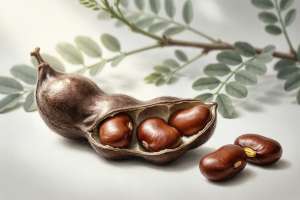
The efficacy and function of locust bean
Overview of the efficacy and functions of locust beanSophora bean, also known as Sophora japonica or Sophora japonica, is the mature fruit of Sophora japonica tree, a leguminous plant, and has various medicinal values in traditional medicine.Its main functions includeClears away heat and cools blood, moisturizes intestines and relieves constipation, lowers blood pressure, and resists oxidationetc., suitable for relieving symptoms such as hemorrhoids, bloody stools, and high blood pressure.Modern
-
View
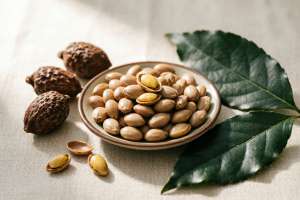
The efficacy and function of Baiziren
Overview of the efficacy and functions of BaizirenBaiziren is the dried and mature seed kernel of Platycladus orientalis, a plant in the Cupressaceae family. Traditional Chinese medicine believes that it is flat in nature and sweet in taste, and can be used to regulate the heart, kidney, and large intestine meridians.Nourish the heart and calm the nerves, moisturize the intestines and relieve constipation, and nourish the liver and kidneysand other effects.Modern research shows that cypress seed
-
View
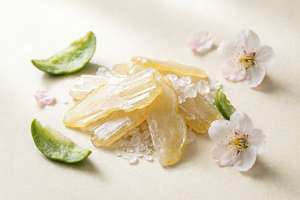
The efficacy and function of plum slices
Overview of the effects and functions of plum slicesPlum slices, also known as borneol or dipterocarp, is a traditional Chinese medicinal material that has the effects of rejuvenating the mind, clearing away heat and relieving pain, reducing swelling and promoting muscle growth.Its main component is dextroborneol, which is widely used in the fields of medicine, cosmetics and spices.The core functions of plum slices include relieving headaches, anti-inflammatory and sterilizing, promoting wound h
-
View
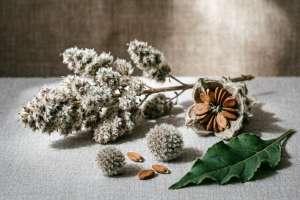
Efficacy and functions of Kochia bark
Overview of the efficacy and functions of Kochia barkKochia bark, also known as broom seedling, is a commonly used medicinal material in traditional Chinese medicine for clearing away heat and promoting dampness.Diuretic and relieve stranguria, dispel wind and relieve itching, clear away heat and detoxifyand other effects.It mainly acts on urinary system inflammation, skin itching and damp-heat jaundice, and is widely used clinically.Secondary functions include assisting in lowering blood sugar,
-
View
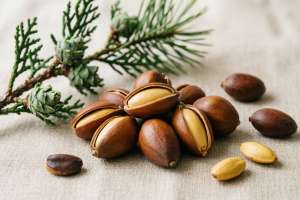
Efficacy and functions of Baiziren
Overview of the efficacy and functions of BaizirenBaiziren is the dried and mature seed kernel of Platycladus orientalis, a plant in the Cupressaceae family. Traditional Chinese medicine believes that it is flat in nature and sweet in taste, and can be used to regulate the heart, kidney, and large intestine meridians.Nourish the heart and calm the nerves, moisturize the intestines and relieve constipation, and nourish the liver and kidneysand other effects.Its main functions include improving sy
-
View
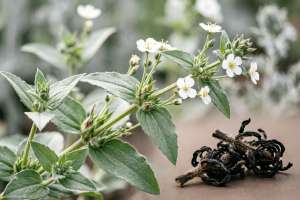
Eclipta Eclipta efficacy and functions
Overview of the efficacy and functions of EcliptaEclipta, also known as Eclipta or Eclipta, is a commonly used medicinal material in traditional Chinese medicine to nourish the liver and kidneys, cool blood and stop bleeding.Its core functions includeNourishes yin and nourishes kidney, blackens beard and hair, stops bleeding and reduces inflammation, the secondary effects involve improving hair loss, relieving gum bleeding and skin eczema.The primary and secondary structure is clear: liver and k
-

View
Function and role of hippocampus
Overview of the functions and functions of the hippocampusSeahorse is a precious marine creature recognized for its many benefits in both traditional medicine and modern research.Its main functions includeReplenishing kidneys and strengthening yang, anti-fatigue, regulating immunity, antioxidantetc., especially the effect of nourishing kidney and replenishing qi is the most prominent.In addition, the hippocampus also plays a certain role in improving blood circulation and relieving neurasthenia.
-
View
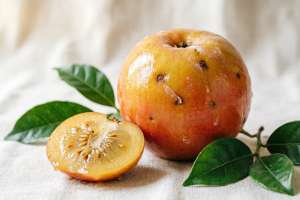
The effects and functions of fragrant fruit
Overview of the effects and functions of fragrant fruitXiangguo, also known as Ligusticum chuanxiong or Shannai, is a plant with both medicinal and edible value, and its rhizomes are often used in traditional Chinese medicine.Its main functions includePromotes blood circulation and removes blood stasis, dispels wind and relieves pain, improves blood circulation, the secondary effects involve relieving headaches, joint pain and women’s menstrual discomfort.The active ingredients of xiangguo, su
-
View
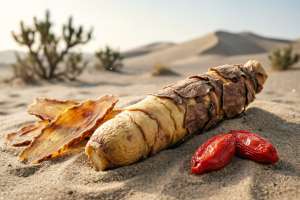
Efficacy and functions of Cistanche deserticola
Overview of the efficacy and functions of Cistanche deserticolaCistanche deserticola, also known as Cistanche deserticola, is a traditional Chinese medicinal material mainly produced in desert areas and is known as "desert ginseng".Its core functions includeReplenishing kidney yang, replenishing essence and blood, moistening intestines and laxative, the secondary effects involve anti-aging, regulating immunity, etc.This article will start from its medicinal value, suitable people, usage methods
-
View
White peony effect and function
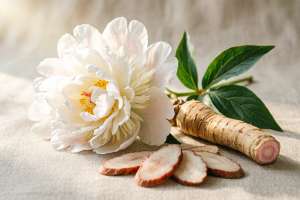
Overview of the efficacy and functions of white peony rootWhite peony root is a commonly used blood-nourishing and menstrual-regulating medicine in traditional Chinese medicine.Nourishes blood and softens liver, relieves pain, astringes yin and stops sweatingIt has core functions such as irregular menstruation, hypochondriac pain, spontaneous sweating and night sweats.Its functions can be divided into two categories: primary and secondary:Main functionsIncluding regulating female endocrine, reli
-
View
Efficacy and functions of Wu Hua Xue Teng
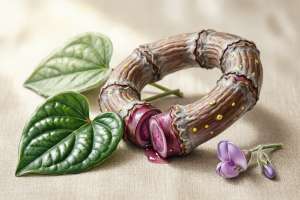
Overview of the efficacy and functions of SpatholobusFive-flowered bloodvine is a traditional Chinese medicinal material, which mainly hasPromotes blood circulation and removes blood stasis, unblocks collaterals to relieve pain, expels wind and removes dampnessIt has other effects and is often used to treat rheumatic arthralgia, bruises and irregular menstruation.Its core function is to promote blood circulation, relieve inflammation and pain, and its secondary functions include assisting in reg
-
View
The efficacy and function of Tianqingdibai
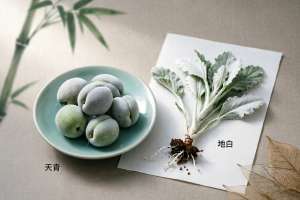
Overview of the efficacy and functions of TianqingdibaiTianqing Dibai is a traditional Chinese medicinal material that has the effects of clearing heat and detoxifying, cooling blood and stopping bleeding, reducing swelling and dissipating stagnation. It is often used to treat sore throat, carbuncle sores, bruises and other diseases.Its main components include flavonoids, organic acids and other active substances. Modern research shows that it has certain anti-inflammatory and antibacterial effe