
- Current location:Home page >> health information
What is skin care?
2026-08-22 22:04:29
Skin Care Overview
Skin care is a comprehensive management process that uses scientific methods to maintain skin health and delay aging. It mainly includes cleaning, moisturizing, sun protection, repair and other links. Its core goal is to maintain the integrity of the skin barrier function, regulate the balance of water and oil, and specifically solve problems such as dryness, sensitivity, and acne. The primary and secondary content structure is:Basic care (cleansing/moisturizing/sunscreen)as the core,Functional care (whitening/anti-wrinkle)To advance,Professional nursing (medical beauty/instrument)for supplement. Different skin types (dry, oily, combination) require differentiated solutions.
Basic care: cleansing and moisturizing
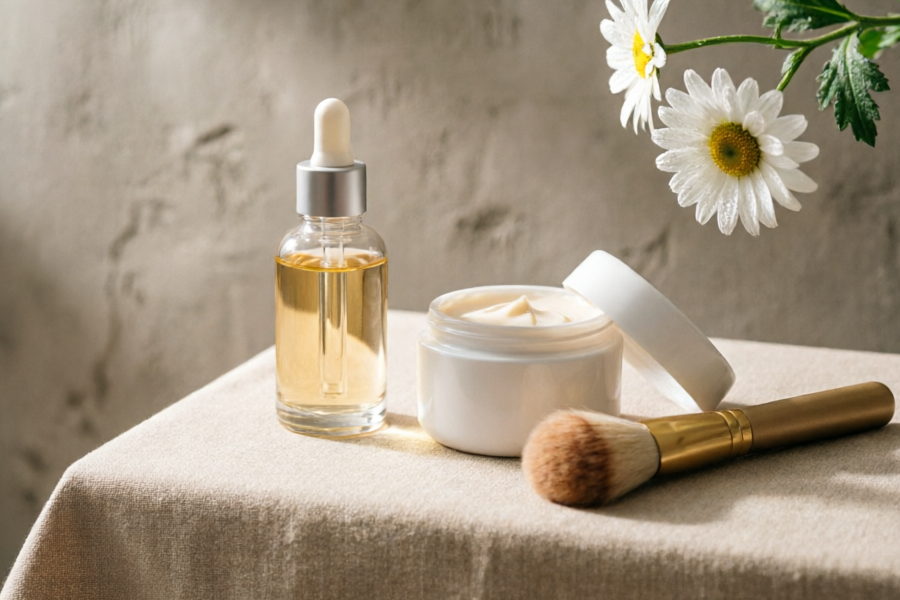
Cleansing is the first step in skin care. You need to choose mild amino acid cleansing products to avoid excessive fat removal and damage to the barrier. For exampleFulifang Silk Purifying Cleansing Cream(Produced by Kanebo, Japan) Reduces irritation through a slightly acidic formula. Moisturizing depends onCeramide(Shiseido research confirms barrier repair) andhyaluronic acid(Bloomage Bio-patented raw materials) and other ingredients, such asWinona Soothing Moisturizing Cream(Produced by Yunnan Beitaini) Designed for sensitive skin. Follow the order of "Cleanse-Water-Essence-Cream" every morning and evening to maintain skin stability.
Advanced care: sun protection and repair
Sun protection is the key to anti-aging.UV raysCauses 90% of skin aging (AAD data from the American Academy of Dermatology). Physical sunscreens such aszinc oxide(Avene Daytime Cream) reflects UV rays and chemical sunscreens such asAvobenzone(Neutrogena Light Sunscreen Lotion) absorbs light energy. Night repair requires cooperationVitamin C(Ceuticals CE Serum) neutralizes free radicals, orNicotinamide(OLAY small white spot lightening bottle) improves dullness. Research shows that consistent use of SPF30+ sunscreen can reduce the risk of wrinkles by 50% (British Journal of Dermatology).
Functional Care: Problem-Based Programs
For specific needs,salicylic acid(Boleda Anti-Acne Gel) can unclog pores,Retinol(Neutrogena A Alcohol Night Cream) promotes collagen production (Harvard Medical School confirmed its anti-wrinkle effect). However, tolerance to functional ingredients needs to be gradually established, such asThe Ordinary 2% Retinol Serum(Produced by Deciem in Canada) It is recommended to start using it 2-3 times a week. Sensitive skin should avoid high-concentration acids. You can chooseMadecassoside(La Roche-Posay B5 Cream) soothes inflammation.
Summary and scientific suggestions
Skin care to follow"Moderate cleansing + adequate moisturizing + strict sun protection"The golden triangle principle is adjusted according to individual differences. Neutral skin type can refer toKerun moisturizing series(Produced by Kao, Japan), suitable for oily acne-prone skinSeraphim Salicylic Acid Cleanser(L’Oréal Group USA). Authoritative organizations such asUSFDAIt is recommended to avoid products containing illegal ingredients such as mercury and hydroquinone. Long-term care needs to be combined with diet (Omega-3 supplementation) and daily routine. Dermatologists recommend VISIA testing once a year to track the improvement.
| Functional ingredients | Representative products | Manufacturer |
|---|---|---|
| Ceramide | Cerave Skin Repair Moisturizing Cream | L'Oréal USA |
| Nicotinamide | SK-II small light bulb essence | P&G Japan |
| Retinol | Elizabeth Arden powder glue | American Revlon |
Quote sources:
1. American Academy of Dermatology (AAD) "Research on Ultraviolet Light and Skin Aging"
2. Harvard Medical School "Retinol in Anti-Aging" (2021)
3. Bloomage Biotech's "Hyaluronic Acid Technology White Paper"
4. Product data comes from the official website of each brand and the registration information of the State Food and Drug Administration
Relevant knowledge
- 2026-10-01How do women take care of their skin scientifically?
- 2026-10-01What is female beauty?
- 2026-09-30How can women supplement calcium scientifically?
- 2026-09-30What is calcium supplementation?
- 2026-09-30How often should bone density checks be done?
- 2026-09-29How to prevent osteoporosis?
- 2026-09-29Why are women prone to osteoporosis?
- 2026-09-29What is osteoporosis?
- 2026-09-28Is hormone replacement therapy safe?
- 2026-09-28What is hormone replacement therapy?
- 2026-09-28How to manage menopause?
- 2026-09-28What are the symptoms of menopause?
- 2026-09-28What is menopause?
- 2026-09-28What does a postpartum review include?
- 2026-09-27What is a postpartum review?
- 2026-09-27Is pelvic floor muscle repair necessary?
- 2026-09-27What is postpartum pelvic floor muscle repair?
- 2026-09-27How to lose weight scientifically after giving birth?
Chinese medicinal materials
More-
View
The efficacy and function of purple beads
Overview of the efficacy and functions of purple beadsPurpurea is a plant with medicinal value. Its leaves, roots and fruits can be used as medicine. Its main functions includeStop bleeding, reduce inflammation, clear away heat and detoxify, dissipate blood stasis and reduce swellingWait.In traditional medicine, purple pearls are often used to treat symptoms such as traumatic bleeding, bruises, and sore throat. Modern research has also found that it contains active ingredients such as flavonoids
-
View
The efficacy and function of locust bean
Overview of the efficacy and functions of locust beanSophora bean, also known as Sophora japonica or Sophora japonica, is the mature fruit of Sophora japonica tree, a leguminous plant, and has various medicinal values in traditional medicine.Its main functions includeClears away heat and cools blood, moisturizes intestines and relieves constipation, lowers blood pressure, and resists oxidationetc., suitable for relieving symptoms such as hemorrhoids, bloody stools, and high blood pressure.Modern
-

View
The efficacy and function of Baiziren
Overview of the efficacy and functions of BaizirenBaiziren is the dried and mature seed kernel of Platycladus orientalis, a plant in the Cupressaceae family. Traditional Chinese medicine believes that it is flat in nature and sweet in taste, and can be used to regulate the heart, kidney, and large intestine meridians.Nourish the heart and calm the nerves, moisturize the intestines and relieve constipation, and nourish the liver and kidneysand other effects.Modern research shows that cypress seed
-

View
The efficacy and function of plum slices
Overview of the effects and functions of plum slicesPlum slices, also known as borneol or dipterocarp, is a traditional Chinese medicinal material that has the effects of rejuvenating the mind, clearing away heat and relieving pain, reducing swelling and promoting muscle growth.Its main component is dextroborneol, which is widely used in the fields of medicine, cosmetics and spices.The core functions of plum slices include relieving headaches, anti-inflammatory and sterilizing, promoting wound h
-

View
Efficacy and functions of Kochia bark
Overview of the efficacy and functions of Kochia barkKochia bark, also known as broom seedling, is a commonly used medicinal material in traditional Chinese medicine for clearing away heat and promoting dampness.Diuretic and relieve stranguria, dispel wind and relieve itching, clear away heat and detoxifyand other effects.It mainly acts on urinary system inflammation, skin itching and damp-heat jaundice, and is widely used clinically.Secondary functions include assisting in lowering blood sugar,
-

View
Efficacy and functions of Baiziren
Overview of the efficacy and functions of BaizirenBaiziren is the dried and mature seed kernel of Platycladus orientalis, a plant in the Cupressaceae family. Traditional Chinese medicine believes that it is flat in nature and sweet in taste, and can be used to regulate the heart, kidney, and large intestine meridians.Nourish the heart and calm the nerves, moisturize the intestines and relieve constipation, and nourish the liver and kidneysand other effects.Its main functions include improving sy
-

View
Eclipta Eclipta efficacy and functions
Overview of the efficacy and functions of EcliptaEclipta, also known as Eclipta or Eclipta, is a commonly used medicinal material in traditional Chinese medicine to nourish the liver and kidneys, cool blood and stop bleeding.Its core functions includeNourishes yin and nourishes kidney, blackens beard and hair, stops bleeding and reduces inflammation, the secondary effects involve improving hair loss, relieving gum bleeding and skin eczema.The primary and secondary structure is clear: liver and k
-

View
Function and role of hippocampus
Overview of the functions and functions of the hippocampusSeahorse is a precious marine creature recognized for its many benefits in both traditional medicine and modern research.Its main functions includeReplenishing kidneys and strengthening yang, anti-fatigue, regulating immunity, antioxidantetc., especially the effect of nourishing kidney and replenishing qi is the most prominent.In addition, the hippocampus also plays a certain role in improving blood circulation and relieving neurasthenia.
-

View
The effects and functions of fragrant fruit
Overview of the effects and functions of fragrant fruitXiangguo, also known as Ligusticum chuanxiong or Shannai, is a plant with both medicinal and edible value, and its rhizomes are often used in traditional Chinese medicine.Its main functions includePromotes blood circulation and removes blood stasis, dispels wind and relieves pain, improves blood circulation, the secondary effects involve relieving headaches, joint pain and women’s menstrual discomfort.The active ingredients of xiangguo, su
-

View
Efficacy and functions of Cistanche deserticola
Overview of the efficacy and functions of Cistanche deserticolaCistanche deserticola, also known as Cistanche deserticola, is a traditional Chinese medicinal material mainly produced in desert areas and is known as "desert ginseng".Its core functions includeReplenishing kidney yang, replenishing essence and blood, moistening intestines and laxative, the secondary effects involve anti-aging, regulating immunity, etc.This article will start from its medicinal value, suitable people, usage methods
-

View
White peony effect and function
Overview of the efficacy and functions of white peony rootWhite peony root is a commonly used blood-nourishing and menstrual-regulating medicine in traditional Chinese medicine.Nourishes blood and softens liver, relieves pain, astringes yin and stops sweatingIt has core functions such as irregular menstruation, hypochondriac pain, spontaneous sweating and night sweats.Its functions can be divided into two categories: primary and secondary:Main functionsIncluding regulating female endocrine, reli
-

View
Efficacy and functions of Wu Hua Xue Teng
Overview of the efficacy and functions of SpatholobusFive-flowered bloodvine is a traditional Chinese medicinal material, which mainly hasPromotes blood circulation and removes blood stasis, unblocks collaterals to relieve pain, expels wind and removes dampnessIt has other effects and is often used to treat rheumatic arthralgia, bruises and irregular menstruation.Its core function is to promote blood circulation, relieve inflammation and pain, and its secondary functions include assisting in reg