
- Current location:Home page >> health information
What is an N95 mask?
2026-08-28 20:30:24
N95 Masks: Protection Standards and Usage Guidelines
First paragraph: content overview
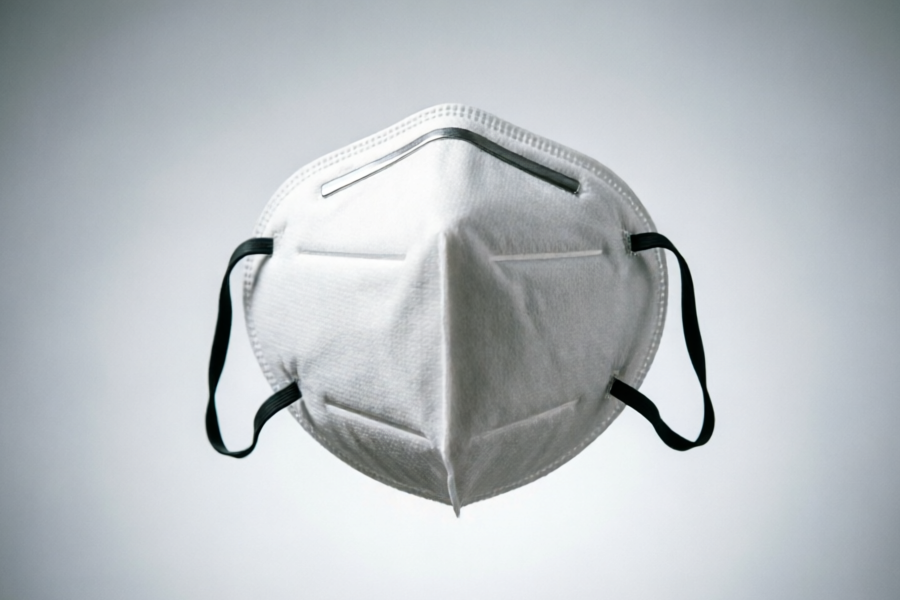
The N95 mask is a type of respiratory protective equipment that meets the US NIOSH (National Institute for Occupational Safety and Health) certification standards and can filter at least 95% of non-oily particles, including viruses, dust and haze.Its core features includeHigh efficiency filtration,Tight designandMedical/industrial use.This article will start from five aspects: definition, protection principle, applicable scenarios, correct use methods and manufacturers, focusing on analyzing the differences between it and ordinary masks and the key points of scientific wearing.
Paragraph 2: Definitions and Standards
The "N" of the N95 mask stands for Non-oil resistant, and the "95" means that the filtration efficiency for 0.3 micron particles is ≥95%.Its core technology lies inElectrostatic melt blown cloth layer, blocking particles through dual mechanisms of physical interception and electrostatic adsorption.Compared with medical surgical masks, N95 has passed strict tightness tests (such as NIOSH-42CFR84 standard) and is more suitable for high-risk environments.It should be noted that KN95 is a Chinese standard (GB2626-2019). Although the filtration efficiency is similar, the certification system is different.
Paragraph 3: Applicable scenarios and limitations
N95 masks are mainly used inmedical protection(such as contact with patients with respiratory infectious diseases) andIndustrial dustproof(Such as mining, building materials operations).But for daily commuting or in low-risk settings, ordinary medical masks are sufficient.Its limitation is that wearing it for a long time may cause a stuffy feeling, and it is not suitable for children or people with facial hair (affecting tightness).The World Health Organization recommends that the general public only use N95 during peak epidemic periods or in closed crowded places.
Paragraph 4: Correct wearing method
When using N95 masks, you must follow the "pre-wear inspection-standard wearing-air tightness test-regular replacement" process:
1. Check whether there is any damage and whether the nose clip can be reshaped;
2. Use both hands to press the nose clip until it fits the face to avoid gaps caused by one-handed operation;
3. Check the edges for leaks by exhaling quickly;
4. Replace immediately after 8 hours of cumulative use or if it becomes contaminated.The US CDC emphasizes that you should not touch the outside of the mask while wearing it, and wash your hands immediately after removing it.
Paragraph 5: Summary and purchasing suggestions
N95 masks are an effective tool to deal with high-risk particulate matter, but they need to be used scientifically.Be careful when purchasingFormal certification mark(such as NIOSH or GB2626), avoid purchasing "three no's" products without production qualifications.The following table lists mainstream manufacturers and products for reference:
| Manufacturer | Brand/Product | Certification standards |
|---|---|---|
| 3M | 3M 8210/1860 | NIOSH N95 |
| Honeywell | Honeywell H910 | NIOSH N95 |
| Zhende Medical | KN95 foldable | GB2626-2019 |
Quote sources:
1. US CDC "N95 Respirators and Surgical Masks"
2. National Health Commission’s “Novel Coronavirus Pneumonia Prevention and Control Plan”
3. NIOSH-42CFR84 certification document
4. Public data from the official website of the manufacturer (as of October 2023)
Relevant knowledge
- 2026-10-01How do women take care of their skin scientifically?
- 2026-10-01What is female beauty?
- 2026-09-30How can women supplement calcium scientifically?
- 2026-09-30What is calcium supplementation?
- 2026-09-30How often should bone density checks be done?
- 2026-09-29How to prevent osteoporosis?
- 2026-09-29Why are women prone to osteoporosis?
- 2026-09-29What is osteoporosis?
- 2026-09-28Is hormone replacement therapy safe?
- 2026-09-28What is hormone replacement therapy?
- 2026-09-28How to manage menopause?
- 2026-09-28What are the symptoms of menopause?
- 2026-09-28What is menopause?
- 2026-09-28What does a postpartum review include?
- 2026-09-27What is a postpartum review?
- 2026-09-27Is pelvic floor muscle repair necessary?
- 2026-09-27What is postpartum pelvic floor muscle repair?
- 2026-09-27How to lose weight scientifically after giving birth?
Chinese medicinal materials
More-
View
The efficacy and function of locust bean
Overview of the efficacy and functions of locust beanSophora bean, also known as Sophora japonica or Sophora japonica, is the mature fruit of Sophora japonica tree, a leguminous plant, and has various medicinal values in traditional medicine.Its main functions includeClears away heat and cools blood, moisturizes intestines and relieves constipation, lowers blood pressure, and resists oxidationetc., suitable for relieving symptoms such as hemorrhoids, bloody stools, and high blood pressure.Modern
-

View
The efficacy and function of Baiziren
Overview of the efficacy and functions of BaizirenBaiziren is the dried and mature seed kernel of Platycladus orientalis, a plant in the Cupressaceae family. Traditional Chinese medicine believes that it is flat in nature and sweet in taste, and can be used to regulate the heart, kidney, and large intestine meridians.Nourish the heart and calm the nerves, moisturize the intestines and relieve constipation, and nourish the liver and kidneysand other effects.Modern research shows that cypress seed
-

View
The efficacy and function of plum slices
Overview of the effects and functions of plum slicesPlum slices, also known as borneol or dipterocarp, is a traditional Chinese medicinal material that has the effects of rejuvenating the mind, clearing away heat and relieving pain, reducing swelling and promoting muscle growth.Its main component is dextroborneol, which is widely used in the fields of medicine, cosmetics and spices.The core functions of plum slices include relieving headaches, anti-inflammatory and sterilizing, promoting wound h
-

View
Efficacy and functions of Kochia bark
Overview of the efficacy and functions of Kochia barkKochia bark, also known as broom seedling, is a commonly used medicinal material in traditional Chinese medicine for clearing away heat and promoting dampness.Diuretic and relieve stranguria, dispel wind and relieve itching, clear away heat and detoxifyand other effects.It mainly acts on urinary system inflammation, skin itching and damp-heat jaundice, and is widely used clinically.Secondary functions include assisting in lowering blood sugar,
-

View
Efficacy and functions of Baiziren
Overview of the efficacy and functions of BaizirenBaiziren is the dried and mature seed kernel of Platycladus orientalis, a plant in the Cupressaceae family. Traditional Chinese medicine believes that it is flat in nature and sweet in taste, and can be used to regulate the heart, kidney, and large intestine meridians.Nourish the heart and calm the nerves, moisturize the intestines and relieve constipation, and nourish the liver and kidneysand other effects.Its main functions include improving sy
-

View
Eclipta Eclipta efficacy and functions
Overview of the efficacy and functions of EcliptaEclipta, also known as Eclipta or Eclipta, is a commonly used medicinal material in traditional Chinese medicine to nourish the liver and kidneys, cool blood and stop bleeding.Its core functions includeNourishes yin and nourishes kidney, blackens beard and hair, stops bleeding and reduces inflammation, the secondary effects involve improving hair loss, relieving gum bleeding and skin eczema.The primary and secondary structure is clear: liver and k
-

View
Function and role of hippocampus
Overview of the functions and functions of the hippocampusSeahorse is a precious marine creature recognized for its many benefits in both traditional medicine and modern research.Its main functions includeReplenishing kidneys and strengthening yang, anti-fatigue, regulating immunity, antioxidantetc., especially the effect of nourishing kidney and replenishing qi is the most prominent.In addition, the hippocampus also plays a certain role in improving blood circulation and relieving neurasthenia.
-

View
The effects and functions of fragrant fruit
Overview of the effects and functions of fragrant fruitXiangguo, also known as Ligusticum chuanxiong or Shannai, is a plant with both medicinal and edible value, and its rhizomes are often used in traditional Chinese medicine.Its main functions includePromotes blood circulation and removes blood stasis, dispels wind and relieves pain, improves blood circulation, the secondary effects involve relieving headaches, joint pain and women’s menstrual discomfort.The active ingredients of xiangguo, su
-

View
Efficacy and functions of Cistanche deserticola
Overview of the efficacy and functions of Cistanche deserticolaCistanche deserticola, also known as Cistanche deserticola, is a traditional Chinese medicinal material mainly produced in desert areas and is known as "desert ginseng".Its core functions includeReplenishing kidney yang, replenishing essence and blood, moistening intestines and laxative, the secondary effects involve anti-aging, regulating immunity, etc.This article will start from its medicinal value, suitable people, usage methods
-

View
White peony effect and function
Overview of the efficacy and functions of white peony rootWhite peony root is a commonly used blood-nourishing and menstrual-regulating medicine in traditional Chinese medicine.Nourishes blood and softens liver, relieves pain, astringes yin and stops sweatingIt has core functions such as irregular menstruation, hypochondriac pain, spontaneous sweating and night sweats.Its functions can be divided into two categories: primary and secondary:Main functionsIncluding regulating female endocrine, reli
-

View
Efficacy and functions of Wu Hua Xue Teng
Overview of the efficacy and functions of SpatholobusFive-flowered bloodvine is a traditional Chinese medicinal material, which mainly hasPromotes blood circulation and removes blood stasis, unblocks collaterals to relieve pain, expels wind and removes dampnessIt has other effects and is often used to treat rheumatic arthralgia, bruises and irregular menstruation.Its core function is to promote blood circulation, relieve inflammation and pain, and its secondary functions include assisting in reg
-
View
The efficacy and function of Tianqingdibai
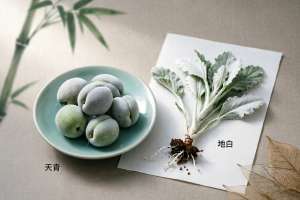
Overview of the efficacy and functions of TianqingdibaiTianqing Dibai is a traditional Chinese medicinal material that has the effects of clearing heat and detoxifying, cooling blood and stopping bleeding, reducing swelling and dissipating stagnation. It is often used to treat sore throat, carbuncle sores, bruises and other diseases.Its main components include flavonoids, organic acids and other active substances. Modern research shows that it has certain anti-inflammatory and antibacterial effe