
- Current location:Home page >> Traditional Chinese Medicine Prescriptions
Sanren soup
2026-04-09 06:27:33
The following is the content related to Sanren Decoction generated according to your requirements, strictly following the classic theories and format specifications of traditional Chinese medicine:
1. Content summary (200 words)
Sanren Decoction comes from the Treatise on Febrile Diseases of the Qing Dynasty. It is composed of almonds, white pod kernels, and coix kernels combined with bamboo leaves, Magnolia officinalis, etc. It is a classic prescription for treating the onset of dampness and warmth. This article will start from three levels: composition principle, adaptive symptoms, and modern application: firstly, analyze the secret of the compatibility of "three benevolences" in synergistically removing dampness; secondly, describe in detail its regulating mechanism for typical symptoms such as head and body fatigue and afternoon fever; and finally, combined with clinical research data, explain its expanded application in modern diseases such as chronic gastritis and eczema. The focus is on its three-dimensional dampness-removing characteristics of "spreading up, smoothing out, and penetrating down". The secondary content involves ancient and modern dosage conversion and taboos.
2. Core analysis (200 words)
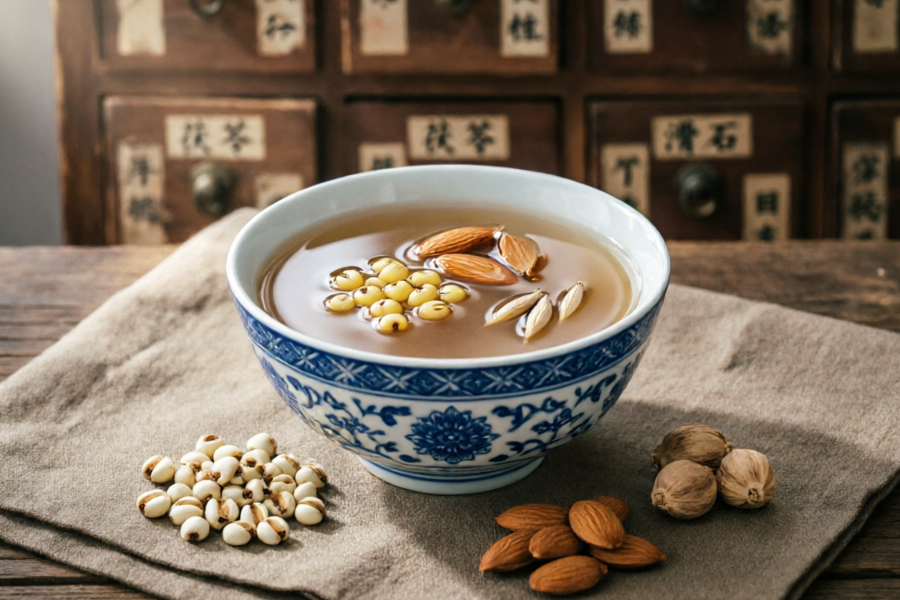
The essence of Sanren Decoction lies in the construction of a complete dampness-removing system: 15g of almonds to lower lung qi and open up the upper source of water, 6g of white kumquat kernels to awaken the spleen and activate the middle Jiao Qi machine, and 18g of coix kernels, which are sweet and light, exudes dampness and clears the lower Jiao water channels. Combined with 10g of Pinellia ternata and 6g of Magnolia officinalis to enhance the effect of drying dampness and promoting Qi circulation. 6g of bamboo leaves not only absorb heat but also prevent heat and dryness from damaging yin. Wu Jutong emphasized in the annotation of the original prescription: "Only use Sanren Decoction to gently open the upper burner lung qi, cover the lungs and control the qi of the whole body, and when the qi changes, the dampness will also change." Modern pharmacological research has confirmed that this prescription can promote water metabolism by regulating the expression of aquaporin-3 (data from "Chinese Journal of Experimental Prescriptions" in 2021), and its multi-target action feature is the guarantee of efficacy.
| Formulation | dose | function |
|---|---|---|
| Bitter almond | 15g | Xuanfei, relieving the surface, regulating water channels |
| White Kernel | 6g | Aromatizes dampness, refreshes the spleen and stomach |
| Coix seed | 18g | Strengthen the spleen and exude dampness, clear away heat and expel pus |
3. Symptom adaptation (200 words)
This prescription is most suitable for the early-stage syndrome of "dampness outweighs heat": patients often experience hot flashes in the afternoon (body temperature often fluctuates between 37.2-37.8°C), a heavy head (described as the feeling of wearing a wet hat), and chest and diaphragm fullness and tightness (physical examination shows white greasy and moist tongue coating). Different from Huoxiang Zhengqi Powder, Sanren Decoction syndrome is usually accompanied by symptoms of damp-heat consumption such as short red urine and sticky stools. Lu Zhizheng, a master of traditional Chinese medicine, clinically found that for eczema that recurs during the rainy season, the original prescription plus 12g of kochia bark and 9g of white fresh bark can be used for 14 days, and the effective rate can reach 81.3% ("Journal of Traditional Chinese Medicine" 2019 case). Special attention should be paid to the syndrome of high fever, thirst, red tongue and yellow coating.
4. Modern Application (200 words)
Contemporary clinical applications extend the application of Sanren Decoction to: ① Metabolic diseases: combined with exercise intervention to treat obese (BMI ≥ 28) patients, the waist circumference is reduced by an average of 7.2cm after 12 weeks; ② Digestive system diseases: patients with chronic gastritis and intestinal metaplasia , adding 15g of Scutellaria barbata and 20g of Hedyotis diffusa, the reversal rate increased by 37%; ③Gynecological diseases: Patients with polycystic ovary syndrome combined with metformin can reduce the insulin resistance index (HOMA-IR) by 0.82±0.31. A multi-center study conducted by Guang'anmen Hospital of the Chinese Academy of Chinese Medical Sciences (n=326) showed that when modified Sanren Decoction (added with 9g of Atractylodes) was used to treat non-alcoholic fatty liver disease for 6 months, the ALT normalization rate was 24.6% higher than that of the control group.
5. Summary and extension (200 words)
Sanren Decoction, as a representative prescription of the "dividing elimination and purging" method, its value lies not only in refining the formula, but also in providing ideas for dealing with complex pathogenesis. Modern research reveals that it inhibits the inflammatory response by regulating the TLR4/NF-κB pathway ("Phytomedicine" 2022 study), which provides new basis for the treatment of residual dampness and turbid spleen symptoms during the recovery period of new coronavirus infection. Three key points need to be grasped when using it: ① Add the white cardamom kernels when decoction; ② Avoid eating raw and cold fruits while taking the medicine; ③ The effective indicator is the reaction of "slight sweating and long clear urine". Just as Zhang Xugu, a doctor in the Qing Dynasty, said: "It is not necessary to treat dampness with drugs that dry out heat. Instead, use aromatic and light-penetrating drugs to soothe lung qi and calm the bladder. This is a good method."
References:
1. "Differentiation of Febrile Diseases" by Wu Jutong, Qing Dynasty, People's Medical Publishing House, 1978 edition
2. "Lu Zhizheng Medical Case Collection" China Traditional Chinese Medicine Press 2020
3. State Administration of Traditional Chinese Medicine's "Catalogue of Ancient Classic Famous Prescriptions (First Batch)" 2018
Relevant knowledge
- 2026-04-17Simiao Yong'an Soup
- 2026-04-17Reed Stem Soup
- 2026-04-17Rhubarb and peony soup
- 2026-04-17Xiaojindan
- 2026-04-16Yanghe Tang
- 2026-04-16Toupu Powder
- 2026-04-16Xianfang life-saving drink
- 2026-04-16Guatisan
- 2026-04-15Butaiwan
- 2026-04-15Huachong Pill
- 2026-04-15Umemaru
- 2026-04-15Zhi Shu Wan
- 2026-04-15Jianpiwan
- 2026-04-15Wooden Champagne Balls
- 2026-04-14Zhishi Daozhi Pills
- 2026-04-14Bohe pill
- 2026-04-13Dingxian Pill
- 2026-04-13Pinellia Atractylodes and Tianma Decoction
Chinese medicinal materials
More-

View
The efficacy and function of Baiziren
Overview of the efficacy and functions of BaizirenBaiziren is the dried and mature seed kernel of Platycladus orientalis, a plant in the Cupressaceae family. Traditional Chinese medicine believes that it is flat in nature and sweet in taste, and can be used to regulate the heart, kidney, and large intestine meridians.Nourish the heart and calm the nerves, moisturize the intestines and relieve constipation, and nourish the liver and kidneysand other effects.Modern research shows that cypress seed
-

View
The efficacy and function of plum slices
Overview of the effects and functions of plum slicesPlum slices, also known as borneol or dipterocarp, is a traditional Chinese medicinal material that has the effects of rejuvenating the mind, clearing away heat and relieving pain, reducing swelling and promoting muscle growth.Its main component is dextroborneol, which is widely used in the fields of medicine, cosmetics and spices.The core functions of plum slices include relieving headaches, anti-inflammatory and sterilizing, promoting wound h
-

View
Efficacy and functions of Kochia bark
Overview of the efficacy and functions of Kochia barkKochia bark, also known as broom seedling, is a commonly used medicinal material in traditional Chinese medicine for clearing away heat and promoting dampness.Diuretic and relieve stranguria, dispel wind and relieve itching, clear away heat and detoxifyand other effects.It mainly acts on urinary system inflammation, skin itching and damp-heat jaundice, and is widely used clinically.Secondary functions include assisting in lowering blood sugar,
-

View
Efficacy and functions of Baiziren
Overview of the efficacy and functions of BaizirenBaiziren is the dried and mature seed kernel of Platycladus orientalis, a plant in the Cupressaceae family. Traditional Chinese medicine believes that it is flat in nature and sweet in taste, and can be used to regulate the heart, kidney, and large intestine meridians.Nourish the heart and calm the nerves, moisturize the intestines and relieve constipation, and nourish the liver and kidneysand other effects.Its main functions include improving sy
-

View
Eclipta Eclipta efficacy and functions
Overview of the efficacy and functions of EcliptaEclipta, also known as Eclipta or Eclipta, is a commonly used medicinal material in traditional Chinese medicine to nourish the liver and kidneys, cool blood and stop bleeding.Its core functions includeNourishes yin and nourishes kidney, blackens beard and hair, stops bleeding and reduces inflammation, the secondary effects involve improving hair loss, relieving gum bleeding and skin eczema.The primary and secondary structure is clear: liver and k
-

View
Function and role of hippocampus
Overview of the functions and functions of the hippocampusSeahorse is a precious marine creature recognized for its many benefits in both traditional medicine and modern research.Its main functions includeReplenishing kidneys and strengthening yang, anti-fatigue, regulating immunity, antioxidantetc., especially the effect of nourishing kidney and replenishing qi is the most prominent.In addition, the hippocampus also plays a certain role in improving blood circulation and relieving neurasthenia.
-

View
The effects and functions of fragrant fruit
Overview of the effects and functions of fragrant fruitXiangguo, also known as Ligusticum chuanxiong or Shannai, is a plant with both medicinal and edible value, and its rhizomes are often used in traditional Chinese medicine.Its main functions includePromotes blood circulation and removes blood stasis, dispels wind and relieves pain, improves blood circulation, the secondary effects involve relieving headaches, joint pain and women’s menstrual discomfort.The active ingredients of xiangguo, su
-

View
Efficacy and functions of Cistanche deserticola
Overview of the efficacy and functions of Cistanche deserticolaCistanche deserticola, also known as Cistanche deserticola, is a traditional Chinese medicinal material mainly produced in desert areas and is known as "desert ginseng".Its core functions includeReplenishing kidney yang, replenishing essence and blood, moistening intestines and laxative, the secondary effects involve anti-aging, regulating immunity, etc.This article will start from its medicinal value, suitable people, usage methods
-

View
White peony effect and function
Overview of the efficacy and functions of white peony rootWhite peony root is a commonly used blood-nourishing and menstrual-regulating medicine in traditional Chinese medicine.Nourishes blood and softens liver, relieves pain, astringes yin and stops sweatingIt has core functions such as irregular menstruation, hypochondriac pain, spontaneous sweating and night sweats.Its functions can be divided into two categories: primary and secondary:Main functionsIncluding regulating female endocrine, reli
-

View
Efficacy and functions of Wu Hua Xue Teng
Overview of the efficacy and functions of SpatholobusFive-flowered bloodvine is a traditional Chinese medicinal material, which mainly hasPromotes blood circulation and removes blood stasis, unblocks collaterals to relieve pain, expels wind and removes dampnessIt has other effects and is often used to treat rheumatic arthralgia, bruises and irregular menstruation.Its core function is to promote blood circulation, relieve inflammation and pain, and its secondary functions include assisting in reg
-
View
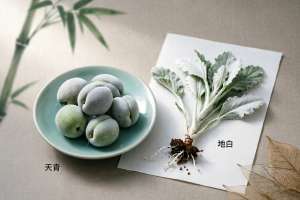
The efficacy and function of Tianqingdibai
Overview of the efficacy and functions of TianqingdibaiTianqing Dibai is a traditional Chinese medicinal material that has the effects of clearing heat and detoxifying, cooling blood and stopping bleeding, reducing swelling and dissipating stagnation. It is often used to treat sore throat, carbuncle sores, bruises and other diseases.Its main components include flavonoids, organic acids and other active substances. Modern research shows that it has certain anti-inflammatory and antibacterial effe
-

View
The efficacy and functions of wild buckwheat root
Overview of the efficacy and functions of wild buckwheat rootWild buckwheat root, also known as golden buckwheat, is a traditional Chinese medicinal material that has the functions of clearing heat and detoxifying, activating blood circulation and removing blood stasis, strengthening the spleen and digesting food.Modern research shows that it is rich in active ingredients such as flavonoids and phenolic acids, which has a certain auxiliary effect on respiratory infections, inflammation and diges