
- Current location:Home page >> health information
How to scientifically build muscle?
2026-03-26 05:51:33
Scientific Guide to Muscle Gaining: A Comprehensive Analysis from Principles to Practice
Scientific muscle gain requires a combination oftraining, nutrition, recoveryThree core elements. First,progressive resistance trainingIt is the key to stimulating muscle growth. It is necessary to pay attention to the standard movement and gradual load; secondly,Protein and Calorie SurplusIt is the material basis for muscle synthesis and requires a reasonable distribution of carbohydrates and fat ratios; finally,Adequate sleep and intermittent recoveryCan optimize hormone secretion and avoid overtraining. Secondary factors include supplement selection, adjustment for individual differences, and long-term periodization plans.
Training: How to build muscle efficiently through resistance training?

Muscle building training needs to be followedThe principle of “progressive overload”, that is, gradually increasing the weight or reps. Compound movements (such as squats and deadlifts) can activate multiple muscle groups. It is recommended to train 3-5 times a week, with 8-12 times per group to failure. Research shows thatEccentric contraction(Slowly lowering the weight) causes more significant muscle fiber damage and promotes greater growth. For example, when bench pressing a barbell, use 2 seconds to push up and 4 seconds to lower. The table shows the comparison of the effects of different training frequencies:
| training frequency | Muscle growth rate (12 weeks) |
|---|---|
| 2 times a week | 8.3% |
| 4 times a week | 12.1% |
Nutrition: Diet strategies and key nutrients during the muscle-building period
Daily intake1.6-2.2 g/kg body weight protein, supplement in 4-5 meals to maintain the synthesis rate. High-quality protein sources include chicken breast and whey protein powder (such as Optimum Nutrition Gold Standard). Carbohydrates should account for 50%-60% of daily calories, supplemented after trainingFast carbs (such as bananas)Can quickly replenish muscle glycogen. According to a Harvard University study,40 kcal surplus per kilogram of body weightIt is the ideal caloric window for building muscle, and excess can lead to fat accumulation.
Recovery: The overlooked muscle-building accelerator
Muscles grow while resting,7-9 hours of deep sleepCan increase growth hormone secretion. You should avoid repeated training of the same muscle groups within 48 hours after training. You can useFoam roller relaxationImprove blood circulation. Research shows thatCortisol levels are too highIt inhibits muscle synthesis, so it is recommended to reduce stress through meditation or walking. The famous coach Charles Poliquin said: "Training without recovery is ineffective training."
Comprehensive application: Develop a personalized muscle-building plan
It is recommended to use3 months cycleAdjust the plan, focus on mastering movements in the early stage, increase the load in the mid-term, and introduce super group training in the later stage. Keep a training log and measure your body fat rate monthly (maintain it at 10%-15%). Optional useCreatine (as MuscleTech)Increase your training capacity, but you need to drink enough water. Remember, natural muscle gain is about 0.5-1kg of muscle per month, and excessive growth may contain water or fat.
Quote sources:
1. "Sports Nutrition" (American College of Sports Medicine, 2022 Edition)
2. Research data: Brad Schoenfeld "The Scientific Principles of Muscle Hypertrophy"
3. Product examples: Optimum Nutrition Whey Protein (USA), Muscle Technology Creatine (China)
4. Celebrity Perspective: Interview with Strength Training Expert Charles Poliquin (2019)
Relevant knowledge
- 2026-10-01What is female beauty?
- 2026-09-30How can women supplement calcium scientifically?
- 2026-09-30What is calcium supplementation?
- 2026-09-30How often should bone density checks be done?
- 2026-09-29How to prevent osteoporosis?
- 2026-09-29Why are women prone to osteoporosis?
- 2026-09-29What is osteoporosis?
- 2026-09-28Is hormone replacement therapy safe?
- 2026-09-28What is hormone replacement therapy?
- 2026-09-28How to manage menopause?
- 2026-09-28What are the symptoms of menopause?
- 2026-09-28What is menopause?
- 2026-09-28What does a postpartum review include?
- 2026-09-27What is a postpartum review?
- 2026-09-27Is pelvic floor muscle repair necessary?
- 2026-09-27What is postpartum pelvic floor muscle repair?
- 2026-09-27How to lose weight scientifically after giving birth?
- 2026-09-26What is postpartum weight loss?
Chinese medicinal materials
More-

View
The efficacy and function of locust bean
Overview of the efficacy and functions of locust beanSophora bean, also known as Sophora japonica or Sophora japonica, is the mature fruit of Sophora japonica tree, a leguminous plant, and has various medicinal values in traditional medicine.Its main functions includeClears away heat and cools blood, moisturizes intestines and relieves constipation, lowers blood pressure, and resists oxidationetc., suitable for relieving symptoms such as hemorrhoids, bloody stools, and high blood pressure.Modern
-

View
The efficacy and function of Baiziren
Overview of the efficacy and functions of BaizirenBaiziren is the dried and mature seed kernel of Platycladus orientalis, a plant in the Cupressaceae family. Traditional Chinese medicine believes that it is flat in nature and sweet in taste, and can be used to regulate the heart, kidney, and large intestine meridians.Nourish the heart and calm the nerves, moisturize the intestines and relieve constipation, and nourish the liver and kidneysand other effects.Modern research shows that cypress seed
-

View
The efficacy and function of plum slices
Overview of the effects and functions of plum slicesPlum slices, also known as borneol or dipterocarp, is a traditional Chinese medicinal material that has the effects of rejuvenating the mind, clearing away heat and relieving pain, reducing swelling and promoting muscle growth.Its main component is dextroborneol, which is widely used in the fields of medicine, cosmetics and spices.The core functions of plum slices include relieving headaches, anti-inflammatory and sterilizing, promoting wound h
-

View
Efficacy and functions of Kochia bark
Overview of the efficacy and functions of Kochia barkKochia bark, also known as broom seedling, is a commonly used medicinal material in traditional Chinese medicine for clearing away heat and promoting dampness.Diuretic and relieve stranguria, dispel wind and relieve itching, clear away heat and detoxifyand other effects.It mainly acts on urinary system inflammation, skin itching and damp-heat jaundice, and is widely used clinically.Secondary functions include assisting in lowering blood sugar,
-

View
Efficacy and functions of Baiziren
Overview of the efficacy and functions of BaizirenBaiziren is the dried and mature seed kernel of Platycladus orientalis, a plant in the Cupressaceae family. Traditional Chinese medicine believes that it is flat in nature and sweet in taste, and can be used to regulate the heart, kidney, and large intestine meridians.Nourish the heart and calm the nerves, moisturize the intestines and relieve constipation, and nourish the liver and kidneysand other effects.Its main functions include improving sy
-

View
Eclipta Eclipta efficacy and functions
Overview of the efficacy and functions of EcliptaEclipta, also known as Eclipta or Eclipta, is a commonly used medicinal material in traditional Chinese medicine to nourish the liver and kidneys, cool blood and stop bleeding.Its core functions includeNourishes yin and nourishes kidney, blackens beard and hair, stops bleeding and reduces inflammation, the secondary effects involve improving hair loss, relieving gum bleeding and skin eczema.The primary and secondary structure is clear: liver and k
-

View
Function and role of hippocampus
Overview of the functions and functions of the hippocampusSeahorse is a precious marine creature recognized for its many benefits in both traditional medicine and modern research.Its main functions includeReplenishing kidneys and strengthening yang, anti-fatigue, regulating immunity, antioxidantetc., especially the effect of nourishing kidney and replenishing qi is the most prominent.In addition, the hippocampus also plays a certain role in improving blood circulation and relieving neurasthenia.
-

View
The effects and functions of fragrant fruit
Overview of the effects and functions of fragrant fruitXiangguo, also known as Ligusticum chuanxiong or Shannai, is a plant with both medicinal and edible value, and its rhizomes are often used in traditional Chinese medicine.Its main functions includePromotes blood circulation and removes blood stasis, dispels wind and relieves pain, improves blood circulation, the secondary effects involve relieving headaches, joint pain and women’s menstrual discomfort.The active ingredients of xiangguo, su
-

View
Efficacy and functions of Cistanche deserticola
Overview of the efficacy and functions of Cistanche deserticolaCistanche deserticola, also known as Cistanche deserticola, is a traditional Chinese medicinal material mainly produced in desert areas and is known as "desert ginseng".Its core functions includeReplenishing kidney yang, replenishing essence and blood, moistening intestines and laxative, the secondary effects involve anti-aging, regulating immunity, etc.This article will start from its medicinal value, suitable people, usage methods
-

View
White peony effect and function
Overview of the efficacy and functions of white peony rootWhite peony root is a commonly used blood-nourishing and menstrual-regulating medicine in traditional Chinese medicine.Nourishes blood and softens liver, relieves pain, astringes yin and stops sweatingIt has core functions such as irregular menstruation, hypochondriac pain, spontaneous sweating and night sweats.Its functions can be divided into two categories: primary and secondary:Main functionsIncluding regulating female endocrine, reli
-

View
Efficacy and functions of Wu Hua Xue Teng
Overview of the efficacy and functions of SpatholobusFive-flowered bloodvine is a traditional Chinese medicinal material, which mainly hasPromotes blood circulation and removes blood stasis, unblocks collaterals to relieve pain, expels wind and removes dampnessIt has other effects and is often used to treat rheumatic arthralgia, bruises and irregular menstruation.Its core function is to promote blood circulation, relieve inflammation and pain, and its secondary functions include assisting in reg
-
View
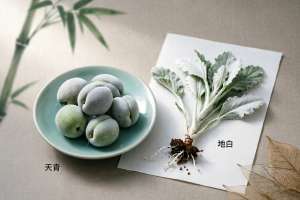
The efficacy and function of Tianqingdibai
Overview of the efficacy and functions of TianqingdibaiTianqing Dibai is a traditional Chinese medicinal material that has the effects of clearing heat and detoxifying, cooling blood and stopping bleeding, reducing swelling and dissipating stagnation. It is often used to treat sore throat, carbuncle sores, bruises and other diseases.Its main components include flavonoids, organic acids and other active substances. Modern research shows that it has certain anti-inflammatory and antibacterial effe