
- Current location:Home page >> health information
What should we pay attention to in children’s physical examination?
2026-05-18 20:19:28
Checkup considerations for children: A comprehensive guide
Children's physical examination is an important part of monitoring their children's growth, development and health. Parents need to pay close attention toPhysical examination frequency, item selection, psychological counselingandAbnormal indicator tracking. It is recommended that children aged 0-6 years old complete in accordance with national regulations"421" physical examination(i.e. 4 times within 1 year old, 2 times between 1-2 years old, and once a year between 3-6 years old). School-age children should have a comprehensive examination at least once a year. Core items include height and weight, vision and hearing, blood routine, bone age assessment, etc. Special needs such as allergen testing must be followed by a doctor's advice. Before the physical examination, you need to make adjustments to your diet and rest to avoid strenuous exercise affecting the results.
Preparation before physical examinationdirectly affects the accuracy of the results. You should maintain a light diet 3 days before the physical examination to avoid high-sugar and high-fat foods that interfere with blood sugar and blood lipid testing; ensure adequate sleep to prevent fatigue from causing abnormal heart rate. Infants and young children need to be broughtvaccination bookandPrevious physical examination reportFor doctors’ reference. Psychological preparation is also crucial. Parents can help their children understand the physical examination process and reduce fear through picture books or role-playing. If the child has a history of chronic diseases or allergies, the doctor needs to be informed in advance to adjust the examination plan.
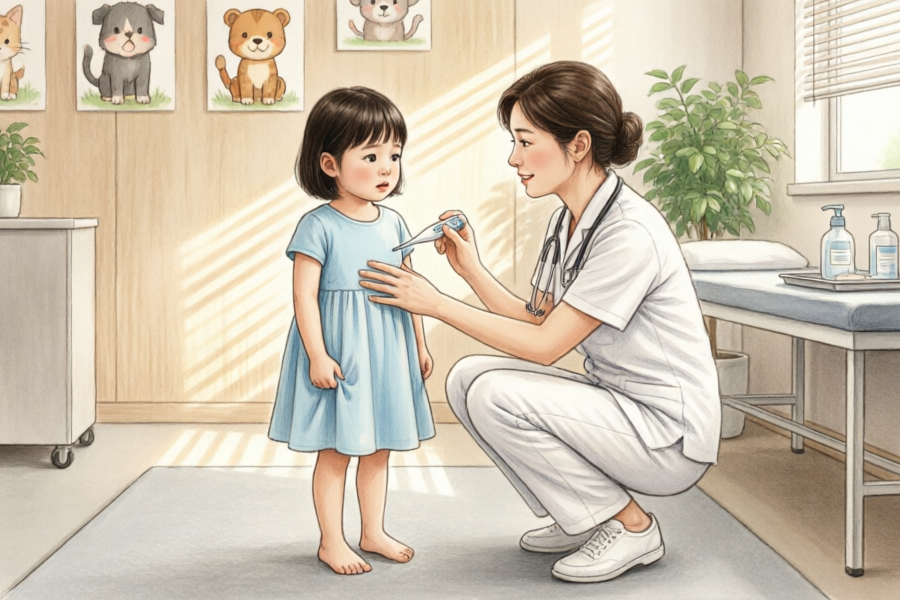
Key points for cooperation during the physical examinationNeed special attention. During the height and weight measurement, the child is required to take off his shoes and stand with his head in a neutral position; for the vision test, the child needs to take off his glasses (if worn). Before routine blood collection, children can be allowed to drink a small amount of warm water to improve blood circulation. Experts from Beijing Children’s Hospital pointed out,30% of pseudoanemia resultsRelated to dehydration of the child during blood collection. Metal jewelry needs to be removed for bone age photography, doctor recommendsX-ray of left wristIt is an international standard. Parents should record the doctor's interpretation of various indicators, focusing on key data such as BMI percentile and hemoglobin value.
Follow-up measures after physical examinationEspecially important. For abnormal indicators found such aspoor visionorstunted growth, need to be reviewed within 1-3 months. Data from the Shanghai Maternal and Child Health Center show that,
| Detection rate of vision problems in 6-year-old children | Reached 28.7% |
| Proportion of children with growth deviation | 12.3% |
Systematic management of children’s healthHome-hospital collaboration is needed. It is recommended to choose a fixed medical institution to ensure uniform inspection standards and useWHO child growth standard curveAssess developmental status. Common problems found in physical examinations - such as 5-year-old children in my countryThe caries prevalence rate of deciduous teeth is 71.9%, need to strengthen daily oral care. Remember that physical examination is only the starting point of health management. Only by combining a balanced diet, moderate exercise and good work and rest can we build a solid foundation for children's health. (Data sources: National Health Commission's "China Maternal and Child Health Development Report", Chinese Medical Association Pediatrics Branch's "Children's Health Technical Specifications")
Relevant knowledge
- 2026-10-01How do women take care of their skin scientifically?
- 2026-10-01What is female beauty?
- 2026-09-30How can women supplement calcium scientifically?
- 2026-09-30What is calcium supplementation?
- 2026-09-30How often should bone density checks be done?
- 2026-09-29How to prevent osteoporosis?
- 2026-09-29Why are women prone to osteoporosis?
- 2026-09-29What is osteoporosis?
- 2026-09-28Is hormone replacement therapy safe?
- 2026-09-28What is hormone replacement therapy?
- 2026-09-28How to manage menopause?
- 2026-09-28What are the symptoms of menopause?
- 2026-09-28What is menopause?
- 2026-09-28What does a postpartum review include?
- 2026-09-27What is a postpartum review?
- 2026-09-27Is pelvic floor muscle repair necessary?
- 2026-09-27What is postpartum pelvic floor muscle repair?
- 2026-09-27How to lose weight scientifically after giving birth?
Chinese medicinal materials
More-
View
The efficacy and function of purple beads
Overview of the efficacy and functions of purple beadsPurpurea is a plant with medicinal value. Its leaves, roots and fruits can be used as medicine. Its main functions includeStop bleeding, reduce inflammation, clear away heat and detoxify, dissipate blood stasis and reduce swellingWait.In traditional medicine, purple pearls are often used to treat symptoms such as traumatic bleeding, bruises, and sore throat. Modern research has also found that it contains active ingredients such as flavonoids
-
View
The efficacy and function of locust bean
Overview of the efficacy and functions of locust beanSophora bean, also known as Sophora japonica or Sophora japonica, is the mature fruit of Sophora japonica tree, a leguminous plant, and has various medicinal values in traditional medicine.Its main functions includeClears away heat and cools blood, moisturizes intestines and relieves constipation, lowers blood pressure, and resists oxidationetc., suitable for relieving symptoms such as hemorrhoids, bloody stools, and high blood pressure.Modern
-

View
The efficacy and function of Baiziren
Overview of the efficacy and functions of BaizirenBaiziren is the dried and mature seed kernel of Platycladus orientalis, a plant in the Cupressaceae family. Traditional Chinese medicine believes that it is flat in nature and sweet in taste, and can be used to regulate the heart, kidney, and large intestine meridians.Nourish the heart and calm the nerves, moisturize the intestines and relieve constipation, and nourish the liver and kidneysand other effects.Modern research shows that cypress seed
-

View
The efficacy and function of plum slices
Overview of the effects and functions of plum slicesPlum slices, also known as borneol or dipterocarp, is a traditional Chinese medicinal material that has the effects of rejuvenating the mind, clearing away heat and relieving pain, reducing swelling and promoting muscle growth.Its main component is dextroborneol, which is widely used in the fields of medicine, cosmetics and spices.The core functions of plum slices include relieving headaches, anti-inflammatory and sterilizing, promoting wound h
-

View
Efficacy and functions of Kochia bark
Overview of the efficacy and functions of Kochia barkKochia bark, also known as broom seedling, is a commonly used medicinal material in traditional Chinese medicine for clearing away heat and promoting dampness.Diuretic and relieve stranguria, dispel wind and relieve itching, clear away heat and detoxifyand other effects.It mainly acts on urinary system inflammation, skin itching and damp-heat jaundice, and is widely used clinically.Secondary functions include assisting in lowering blood sugar,
-

View
Efficacy and functions of Baiziren
Overview of the efficacy and functions of BaizirenBaiziren is the dried and mature seed kernel of Platycladus orientalis, a plant in the Cupressaceae family. Traditional Chinese medicine believes that it is flat in nature and sweet in taste, and can be used to regulate the heart, kidney, and large intestine meridians.Nourish the heart and calm the nerves, moisturize the intestines and relieve constipation, and nourish the liver and kidneysand other effects.Its main functions include improving sy
-

View
Eclipta Eclipta efficacy and functions
Overview of the efficacy and functions of EcliptaEclipta, also known as Eclipta or Eclipta, is a commonly used medicinal material in traditional Chinese medicine to nourish the liver and kidneys, cool blood and stop bleeding.Its core functions includeNourishes yin and nourishes kidney, blackens beard and hair, stops bleeding and reduces inflammation, the secondary effects involve improving hair loss, relieving gum bleeding and skin eczema.The primary and secondary structure is clear: liver and k
-

View
Function and role of hippocampus
Overview of the functions and functions of the hippocampusSeahorse is a precious marine creature recognized for its many benefits in both traditional medicine and modern research.Its main functions includeReplenishing kidneys and strengthening yang, anti-fatigue, regulating immunity, antioxidantetc., especially the effect of nourishing kidney and replenishing qi is the most prominent.In addition, the hippocampus also plays a certain role in improving blood circulation and relieving neurasthenia.
-

View
The effects and functions of fragrant fruit
Overview of the effects and functions of fragrant fruitXiangguo, also known as Ligusticum chuanxiong or Shannai, is a plant with both medicinal and edible value, and its rhizomes are often used in traditional Chinese medicine.Its main functions includePromotes blood circulation and removes blood stasis, dispels wind and relieves pain, improves blood circulation, the secondary effects involve relieving headaches, joint pain and women’s menstrual discomfort.The active ingredients of xiangguo, su
-

View
Efficacy and functions of Cistanche deserticola
Overview of the efficacy and functions of Cistanche deserticolaCistanche deserticola, also known as Cistanche deserticola, is a traditional Chinese medicinal material mainly produced in desert areas and is known as "desert ginseng".Its core functions includeReplenishing kidney yang, replenishing essence and blood, moistening intestines and laxative, the secondary effects involve anti-aging, regulating immunity, etc.This article will start from its medicinal value, suitable people, usage methods
-

View
White peony effect and function
Overview of the efficacy and functions of white peony rootWhite peony root is a commonly used blood-nourishing and menstrual-regulating medicine in traditional Chinese medicine.Nourishes blood and softens liver, relieves pain, astringes yin and stops sweatingIt has core functions such as irregular menstruation, hypochondriac pain, spontaneous sweating and night sweats.Its functions can be divided into two categories: primary and secondary:Main functionsIncluding regulating female endocrine, reli
-

View
Efficacy and functions of Wu Hua Xue Teng
Overview of the efficacy and functions of SpatholobusFive-flowered bloodvine is a traditional Chinese medicinal material, which mainly hasPromotes blood circulation and removes blood stasis, unblocks collaterals to relieve pain, expels wind and removes dampnessIt has other effects and is often used to treat rheumatic arthralgia, bruises and irregular menstruation.Its core function is to promote blood circulation, relieve inflammation and pain, and its secondary functions include assisting in reg