
- Current location:Home page >> Traditional Chinese Medicine Health Care
How to understand the overall concept of traditional Chinese medicine?
2026-03-06 18:14:24
How to understand the overall concept of traditional Chinese medicine?
The holistic concept of traditional Chinese medicine is one of the core ideas of traditional Chinese medicine theory. It emphasizes that the human body is an organic whole, and various organs, meridians, and qi and blood are interrelated. At the same time, humans are inseparable from nature and the social environment. This concept runs through the diagnosis, treatment and health care of traditional Chinese medicine, and mainly includes three levels:The internal unity of the human body, the coordination between man and nature, and the adaptability between man and society. Understanding the overall concept helps to understand health and disease more comprehensively, and guides the syndrome differentiation and treatment of traditional Chinese medicine.
1. The internal unity of the human body
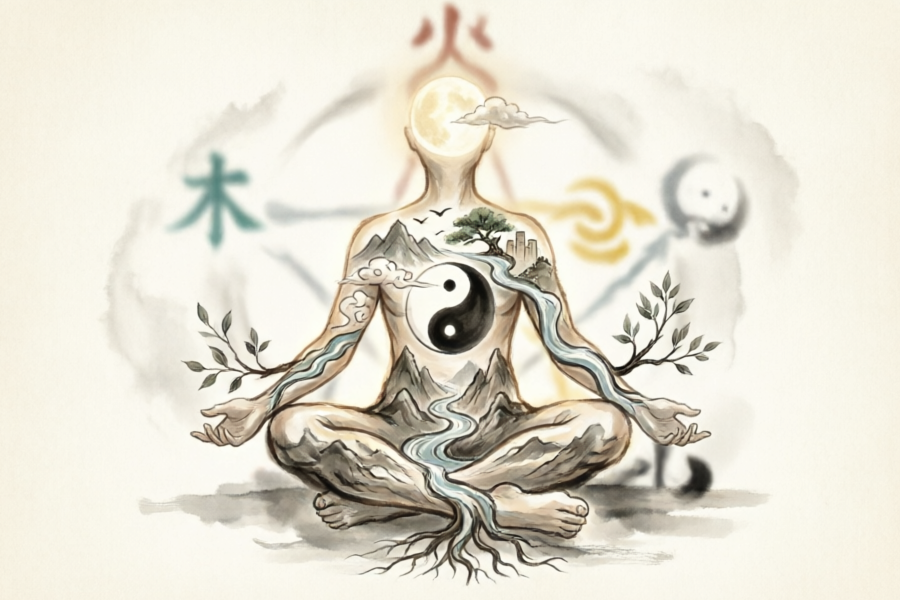
Traditional Chinese medicine believes that the human body is a whole with the five internal organs (heart, liver, spleen, lungs, kidneys) as the center and connected through meridians, qi and blood. For example, the liver governs dispersion and is related to emotional regulation. If liver qi is stagnated, it may affect the function of the spleen and stomach, leading to indigestion. This mutual influence between the organs embodies the overall thinking of traditional Chinese medicine that "a single move affects the whole body." In terms of treatment, Chinese medicine does not treat a certain symptom in isolation, but improves local problems by regulating the overall balance.
2. Harmony between man and nature
Traditional Chinese medicine emphasizes the "correspondence between nature and man" and believes that human health is closely related to the natural environment. The changes in the four seasons and the alternation of day and night will affect the physiological functions of the human body. For example, in summer, when Yang Qi is strong, the human body tends to sweat. At this time, you should avoid excessive craving for cold, so as not to damage Yang Qi. Traditional Chinese medicine health preservation advocates "complying with the four seasons", as stated in the "Huangdi Neijing": "nourishing yang in spring and summer, nourishing yin in autumn and winter", and adapting to the laws of nature by adjusting diet, work and rest.
3. Adaptability between people and society
Social environment and emotional changes can also affect health. Traditional Chinese medicine believes that excessive "seven emotions" (joy, anger, worry, thoughts, sadness, fear, and panic) will damage the internal organs. Long-term stress may lead to liver stagnation and qi stagnation. Therefore, traditional Chinese medicine not only pays attention to physical symptoms, but also pays attention to psychological adjustment, advocating "co-nurturing body and spirit". Modern medicine has also confirmed that emotional management has an important impact on immunity and cardiovascular health.
Summary
The overall concept of traditional Chinese medicine is a multi-dimensional view of health, which regards the human body, nature, and society as a dynamically balanced system. This concept guides traditional Chinese medicine to analyze diseases from a macro perspective and restore balance through comprehensive conditioning (such as traditional Chinese medicine, acupuncture, and emotional regulation). Modern people can learn from this thinking, avoid "treating the head with headaches", and focus on the harmony between lifestyle and environment, so as to achieve true health.
Quote sources:
1. "Huangdi Neijing", a classic work of traditional Chinese medicine, expounds the theory of "unity of nature and man".
2. Zhang Zhongjing's "Treatise on Febrile and Miscellaneous Diseases" emphasizes the holistic view of syndrome differentiation and treatment.
3. The modern Chinese medicine textbook "Basic Theory of Chinese Medicine" systematically explains the overall concept.
4. Related proprietary Chinese medicines (such asXiaoyaowan,Guipi Pills) is produced by Tongrentang, Guangyuyuan and other manufacturers and is used to harmonize the liver and spleen and improve overall function.
Relevant knowledge
- 2026-09-30How to maintain health during the hot summer?
- 2026-09-30How to maintain health during Xiaoshu?
- 2026-09-30How to maintain health during the summer solstice?
- 2026-09-29How to maintain the health of Eargrass?
- 2026-09-29How does Xiaoman maintain his health?
- 2026-09-29How to maintain health in Beginning of Summer?
- 2026-09-29How to maintain health during Guyu?
- 2026-09-28How to maintain health during Qingming Festival?
- 2026-09-28How to maintain health during the Spring Equinox?
- 2026-09-28How to maintain health in Jingzhe?
- 2026-09-28How to maintain health through rainwater?
- 2026-09-28How to maintain health at the beginning of spring?
- 2026-09-28What is the relationship between the twenty-four solar terms and health preservation?
- 2026-09-27How to prevent cold evil in winter?
- 2026-09-27How to take care of your emotions in winter?
- 2026-09-27What should you pay attention to when dressing in winter?
- 2026-09-26What should you pay attention to when sleeping in winter?
- 2026-09-26How to prevent cardiovascular and cerebrovascular diseases in winter?
Chinese medicinal materials
More-
View
The efficacy and function of Baiziren
Overview of the efficacy and functions of BaizirenBaiziren is the dried and mature seed kernel of Platycladus orientalis, a plant in the Cupressaceae family. Traditional Chinese medicine believes that it is flat in nature and sweet in taste, and can be used to regulate the heart, kidney, and large intestine meridians.Nourish the heart and calm the nerves, moisturize the intestines and relieve constipation, and nourish the liver and kidneysand other effects.Modern research shows that cypress seed
-
View
The efficacy and function of plum slices
Overview of the effects and functions of plum slicesPlum slices, also known as borneol or dipterocarp, is a traditional Chinese medicinal material that has the effects of rejuvenating the mind, clearing away heat and relieving pain, reducing swelling and promoting muscle growth.Its main component is dextroborneol, which is widely used in the fields of medicine, cosmetics and spices.The core functions of plum slices include relieving headaches, anti-inflammatory and sterilizing, promoting wound h
-
View
Efficacy and functions of Kochia bark
Overview of the efficacy and functions of Kochia barkKochia bark, also known as broom seedling, is a commonly used medicinal material in traditional Chinese medicine for clearing away heat and promoting dampness.Diuretic and relieve stranguria, dispel wind and relieve itching, clear away heat and detoxifyand other effects.It mainly acts on urinary system inflammation, skin itching and damp-heat jaundice, and is widely used clinically.Secondary functions include assisting in lowering blood sugar,
-
View
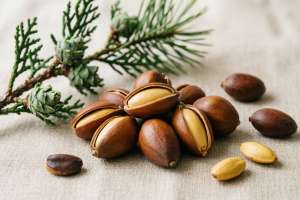
Efficacy and functions of Baiziren
Overview of the efficacy and functions of BaizirenBaiziren is the dried and mature seed kernel of Platycladus orientalis, a plant in the Cupressaceae family. Traditional Chinese medicine believes that it is flat in nature and sweet in taste, and can be used to regulate the heart, kidney, and large intestine meridians.Nourish the heart and calm the nerves, moisturize the intestines and relieve constipation, and nourish the liver and kidneysand other effects.Its main functions include improving sy
-
View
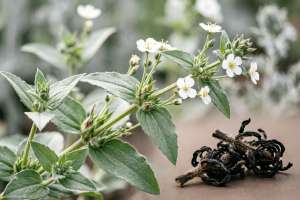
Eclipta Eclipta efficacy and functions
Overview of the efficacy and functions of EcliptaEclipta, also known as Eclipta or Eclipta, is a commonly used medicinal material in traditional Chinese medicine to nourish the liver and kidneys, cool blood and stop bleeding.Its core functions includeNourishes yin and nourishes kidney, blackens beard and hair, stops bleeding and reduces inflammation, the secondary effects involve improving hair loss, relieving gum bleeding and skin eczema.The primary and secondary structure is clear: liver and k
-

View
Function and role of hippocampus
Overview of the functions and functions of the hippocampusSeahorse is a precious marine creature recognized for its many benefits in both traditional medicine and modern research.Its main functions includeReplenishing kidneys and strengthening yang, anti-fatigue, regulating immunity, antioxidantetc., especially the effect of nourishing kidney and replenishing qi is the most prominent.In addition, the hippocampus also plays a certain role in improving blood circulation and relieving neurasthenia.
-
View
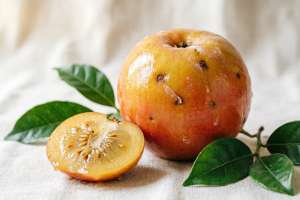
The effects and functions of fragrant fruit
Overview of the effects and functions of fragrant fruitXiangguo, also known as Ligusticum chuanxiong or Shannai, is a plant with both medicinal and edible value, and its rhizomes are often used in traditional Chinese medicine.Its main functions includePromotes blood circulation and removes blood stasis, dispels wind and relieves pain, improves blood circulation, the secondary effects involve relieving headaches, joint pain and women’s menstrual discomfort.The active ingredients of xiangguo, su
-
View
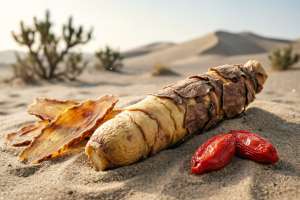
Efficacy and functions of Cistanche deserticola
Overview of the efficacy and functions of Cistanche deserticolaCistanche deserticola, also known as Cistanche deserticola, is a traditional Chinese medicinal material mainly produced in desert areas and is known as "desert ginseng".Its core functions includeReplenishing kidney yang, replenishing essence and blood, moistening intestines and laxative, the secondary effects involve anti-aging, regulating immunity, etc.This article will start from its medicinal value, suitable people, usage methods
-
View
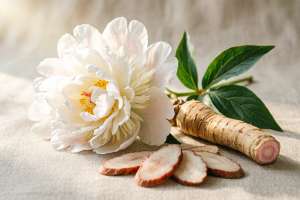
White peony effect and function
Overview of the efficacy and functions of white peony rootWhite peony root is a commonly used blood-nourishing and menstrual-regulating medicine in traditional Chinese medicine.Nourishes blood and softens liver, relieves pain, astringes yin and stops sweatingIt has core functions such as irregular menstruation, hypochondriac pain, spontaneous sweating and night sweats.Its functions can be divided into two categories: primary and secondary:Main functionsIncluding regulating female endocrine, reli
-
View
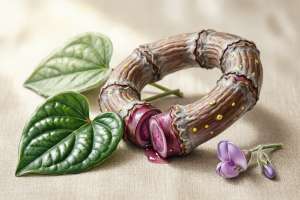
Efficacy and functions of Wu Hua Xue Teng
Overview of the efficacy and functions of SpatholobusFive-flowered bloodvine is a traditional Chinese medicinal material, which mainly hasPromotes blood circulation and removes blood stasis, unblocks collaterals to relieve pain, expels wind and removes dampnessIt has other effects and is often used to treat rheumatic arthralgia, bruises and irregular menstruation.Its core function is to promote blood circulation, relieve inflammation and pain, and its secondary functions include assisting in reg
-
View
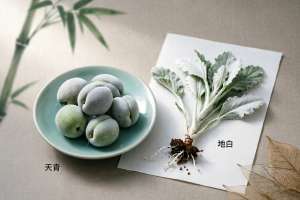
The efficacy and function of Tianqingdibai
Overview of the efficacy and functions of TianqingdibaiTianqing Dibai is a traditional Chinese medicinal material that has the effects of clearing heat and detoxifying, cooling blood and stopping bleeding, reducing swelling and dissipating stagnation. It is often used to treat sore throat, carbuncle sores, bruises and other diseases.Its main components include flavonoids, organic acids and other active substances. Modern research shows that it has certain anti-inflammatory and antibacterial effe
-
View
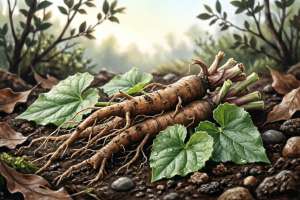
The efficacy and functions of wild buckwheat root
Overview of the efficacy and functions of wild buckwheat rootWild buckwheat root, also known as golden buckwheat, is a traditional Chinese medicinal material that has the functions of clearing heat and detoxifying, activating blood circulation and removing blood stasis, strengthening the spleen and digesting food.Modern research shows that it is rich in active ingredients such as flavonoids and phenolic acids, which has a certain auxiliary effect on respiratory infections, inflammation and diges