
- Current location:Home page >> Traditional Chinese Medicine Health Care
What is the difference between traditional Chinese medicine and modern medicine?
2026-03-16 16:12:37
The difference between traditional Chinese medicine and modern medicine: primary and secondary structure
There are significant differences in concepts and methods between traditional Chinese medicine and modern medicine. Traditional Chinese medicine health care emphasizes a holistic view and prevention, and maintains health by harmonizing yin and yang, qi and blood, and organ function. Commonly used methods include herbal medicine, acupuncture, and dietary therapy. Modern medicine is based on empirical science, focuses on disease diagnosis and treatment, and relies on drugs, surgery and advanced technology. The core difference between the two is that traditional Chinese medicine focuses on "preventing disease" and individualized conditioning, while modern medicine pays more attention to pathological mechanisms and standardized treatment. This article will compare the theoretical basis, practical methods, adaptation scenarios, etc.
Theoretical basis: overall view and micro analysis
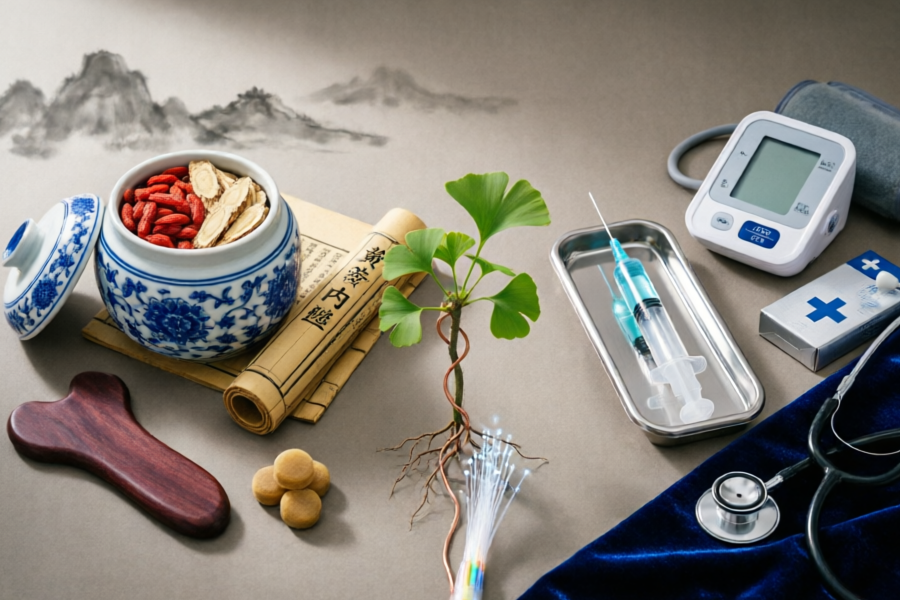
The theoretical basis of traditional Chinese medicine health care comes from the "Huangdi Neijing", which believes that the human body and nature are an organic whole, and health depends on the balance of yin and yang and the smooth flow of qi and blood. For example, the Four Seasons Health Preservation emphasizes the law of "birth in spring, growth in summer, harvest in autumn and storage in winter". Modern medicine is based on anatomy, physiology and molecular biology, and verifies efficacy through laboratory data and clinical trials. For example, in the treatment of hypertension, Western medicine focuses on blood pressure values and vascular lesions, while traditional Chinese medicine attributes it to "hyperactivity of liver yang" or "internal obstruction of phlegm and dampness". This difference causes traditional Chinese medicine to pay more attention to lifestyle adjustments, while modern medicine tends to target intervention.
Practical methods: natural therapies and technological means
Traditional Chinese medicine commonly uses natural therapies for health care, such as moxibustion, cupping, medicated diet, etc., emphasizing "three-part treatment and seven-part nourishment". For example, astragalus stewed chicken is recommended for those with qi deficiency, and barley and red bean porridge is recommended for those with damp-heat constitution. Modern medicine relies on chemical drugs (such as antihypertensive drugs) or surgery (such as stent implantation), and technical methods include MRI, genetic testing, etc. Both have their own advantages: Traditional Chinese medicine has fewer side effects but is slow to take effect, while Western medicine has fast effects but may be accompanied by drug resistance. In recent years, the model of integrated traditional Chinese and Western medicine (such as the use of traditional Chinese medicine after tumor radiotherapy and chemotherapy) has gradually been recognized.
Adaptation scenarios: Chronic disease management and acute treatment
Traditional Chinese medicine health care is more suitable for chronic disease management and sub-health conditioning, such as insomnia, fatigue syndrome, etc., and can improve physical fitness through long-term conditioning. Modern medicine has more advantages in the treatment of acute diseases (such as myocardial infarction, infection) and critical illness. For example, in the treatment of diabetes, Western medicine uses insulin to control blood sugar, while traditional Chinese medicine helps relieve complications by nourishing yin and clearing away heat (such as Liuwei Dihuang Pills). It is worth noting that some traditional Chinese medicines (such as Danshen Dropping Pills) have proven their efficacy through modern pharmacological research, reflecting the possibility of fusion.
Summary: Complementary rather than antagonistic
Traditional Chinese medicine health preservation and modern medicine are not antagonistic, but complementary. The concept of "preventing disease" of traditional Chinese medicine can reduce the occurrence of diseases, and the precise treatment of modern medicine can quickly solve health crises. For example,TongrentangThe Angong Niuhuang Pills (used for stroke first aid) combine traditional recipes with modern technology. The choice needs to be based on personal circumstances: for chronic conditions, traditional Chinese medicine should be given priority, and for emergencies, modern medicine should be sought. In the future, with the deepening of research, the collaboration between the two may become the mainstream health management model.
| Category | Representative products of traditional Chinese medicine | Representative products of modern medicine |
|---|---|---|
| Nourishing Qi and Nourishing Blood | Compound donkey-hide gelatin slurry (dong'e donkey-hide gelatin) | Iron supplement tablets (such as Sulife) |
| cardiovascular | Danshen Dropping Pills (Tasly) | Aspirin (Bayer) |
Quote sources:
1. The classic theory of "Huangdi Neijing" (Spring and Autumn Period and Warring States Period) 2. World Health Organization's "Traditional Medicine Strategy 2014-2023" 3. Academician Zhang Boli's "Prevention and Treatment of Chronic Diseases with Integrated Traditional Chinese and Western Medicine" Research Report 4. Manufacturing enterprises:Dong'e donkey-hide gelatin(Compound donkey-hide gelatin paste),Tasly(Salvia miltiorrhiza dropping pills),bayer(Aspirin)
Relevant knowledge
- 2026-10-01How to maintain health at the beginning of autumn?
- 2026-09-30How to maintain health during the hot summer?
- 2026-09-30How to maintain health during Xiaoshu?
- 2026-09-30How to maintain health during the summer solstice?
- 2026-09-29How to maintain the health of Eargrass?
- 2026-09-29How does Xiaoman maintain his health?
- 2026-09-29How to maintain health in Beginning of Summer?
- 2026-09-29How to maintain health during Guyu?
- 2026-09-28How to maintain health during Qingming Festival?
- 2026-09-28How to maintain health during the Spring Equinox?
- 2026-09-28How to maintain health in Jingzhe?
- 2026-09-28How to maintain health through rainwater?
- 2026-09-28How to maintain health at the beginning of spring?
- 2026-09-28What is the relationship between the twenty-four solar terms and health preservation?
- 2026-09-27How to prevent cold evil in winter?
- 2026-09-27How to take care of your emotions in winter?
- 2026-09-27What should you pay attention to when dressing in winter?
- 2026-09-26What should you pay attention to when sleeping in winter?
Chinese medicinal materials
More-
View
The efficacy and function of locust bean
Overview of the efficacy and functions of locust beanSophora bean, also known as Sophora japonica or Sophora japonica, is the mature fruit of Sophora japonica tree, a leguminous plant, and has various medicinal values in traditional medicine.Its main functions includeClears away heat and cools blood, moisturizes intestines and relieves constipation, lowers blood pressure, and resists oxidationetc., suitable for relieving symptoms such as hemorrhoids, bloody stools, and high blood pressure.Modern
-

View
The efficacy and function of Baiziren
Overview of the efficacy and functions of BaizirenBaiziren is the dried and mature seed kernel of Platycladus orientalis, a plant in the Cupressaceae family. Traditional Chinese medicine believes that it is flat in nature and sweet in taste, and can be used to regulate the heart, kidney, and large intestine meridians.Nourish the heart and calm the nerves, moisturize the intestines and relieve constipation, and nourish the liver and kidneysand other effects.Modern research shows that cypress seed
-

View
The efficacy and function of plum slices
Overview of the effects and functions of plum slicesPlum slices, also known as borneol or dipterocarp, is a traditional Chinese medicinal material that has the effects of rejuvenating the mind, clearing away heat and relieving pain, reducing swelling and promoting muscle growth.Its main component is dextroborneol, which is widely used in the fields of medicine, cosmetics and spices.The core functions of plum slices include relieving headaches, anti-inflammatory and sterilizing, promoting wound h
-

View
Efficacy and functions of Kochia bark
Overview of the efficacy and functions of Kochia barkKochia bark, also known as broom seedling, is a commonly used medicinal material in traditional Chinese medicine for clearing away heat and promoting dampness.Diuretic and relieve stranguria, dispel wind and relieve itching, clear away heat and detoxifyand other effects.It mainly acts on urinary system inflammation, skin itching and damp-heat jaundice, and is widely used clinically.Secondary functions include assisting in lowering blood sugar,
-

View
Efficacy and functions of Baiziren
Overview of the efficacy and functions of BaizirenBaiziren is the dried and mature seed kernel of Platycladus orientalis, a plant in the Cupressaceae family. Traditional Chinese medicine believes that it is flat in nature and sweet in taste, and can be used to regulate the heart, kidney, and large intestine meridians.Nourish the heart and calm the nerves, moisturize the intestines and relieve constipation, and nourish the liver and kidneysand other effects.Its main functions include improving sy
-

View
Eclipta Eclipta efficacy and functions
Overview of the efficacy and functions of EcliptaEclipta, also known as Eclipta or Eclipta, is a commonly used medicinal material in traditional Chinese medicine to nourish the liver and kidneys, cool blood and stop bleeding.Its core functions includeNourishes yin and nourishes kidney, blackens beard and hair, stops bleeding and reduces inflammation, the secondary effects involve improving hair loss, relieving gum bleeding and skin eczema.The primary and secondary structure is clear: liver and k
-

View
Function and role of hippocampus
Overview of the functions and functions of the hippocampusSeahorse is a precious marine creature recognized for its many benefits in both traditional medicine and modern research.Its main functions includeReplenishing kidneys and strengthening yang, anti-fatigue, regulating immunity, antioxidantetc., especially the effect of nourishing kidney and replenishing qi is the most prominent.In addition, the hippocampus also plays a certain role in improving blood circulation and relieving neurasthenia.
-

View
The effects and functions of fragrant fruit
Overview of the effects and functions of fragrant fruitXiangguo, also known as Ligusticum chuanxiong or Shannai, is a plant with both medicinal and edible value, and its rhizomes are often used in traditional Chinese medicine.Its main functions includePromotes blood circulation and removes blood stasis, dispels wind and relieves pain, improves blood circulation, the secondary effects involve relieving headaches, joint pain and women’s menstrual discomfort.The active ingredients of xiangguo, su
-

View
Efficacy and functions of Cistanche deserticola
Overview of the efficacy and functions of Cistanche deserticolaCistanche deserticola, also known as Cistanche deserticola, is a traditional Chinese medicinal material mainly produced in desert areas and is known as "desert ginseng".Its core functions includeReplenishing kidney yang, replenishing essence and blood, moistening intestines and laxative, the secondary effects involve anti-aging, regulating immunity, etc.This article will start from its medicinal value, suitable people, usage methods
-

View
White peony effect and function
Overview of the efficacy and functions of white peony rootWhite peony root is a commonly used blood-nourishing and menstrual-regulating medicine in traditional Chinese medicine.Nourishes blood and softens liver, relieves pain, astringes yin and stops sweatingIt has core functions such as irregular menstruation, hypochondriac pain, spontaneous sweating and night sweats.Its functions can be divided into two categories: primary and secondary:Main functionsIncluding regulating female endocrine, reli
-

View
Efficacy and functions of Wu Hua Xue Teng
Overview of the efficacy and functions of SpatholobusFive-flowered bloodvine is a traditional Chinese medicinal material, which mainly hasPromotes blood circulation and removes blood stasis, unblocks collaterals to relieve pain, expels wind and removes dampnessIt has other effects and is often used to treat rheumatic arthralgia, bruises and irregular menstruation.Its core function is to promote blood circulation, relieve inflammation and pain, and its secondary functions include assisting in reg
-
View
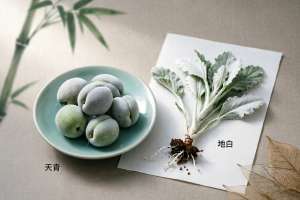
The efficacy and function of Tianqingdibai
Overview of the efficacy and functions of TianqingdibaiTianqing Dibai is a traditional Chinese medicinal material that has the effects of clearing heat and detoxifying, cooling blood and stopping bleeding, reducing swelling and dissipating stagnation. It is often used to treat sore throat, carbuncle sores, bruises and other diseases.Its main components include flavonoids, organic acids and other active substances. Modern research shows that it has certain anti-inflammatory and antibacterial effe