
- Current location:Home page >> Traditional Chinese Medicine Health Care
What is the relationship between traditional Chinese medicine and traditional culture?
2026-03-20 14:11:34
An overview of the relationship between traditional Chinese medicine health care and traditional culture
Traditional Chinese medicine health care is inseparable from traditional culture, and together they constitute the philosophy and practice system of Chinese people’s healthy life. Traditional culture provides the theoretical foundation for traditional Chinese medicine health care, such as the ideas of yin-yang and five elements, the unity of nature and man, and traditional Chinese medicine health care is the concrete application of these theories in the health field. The main content can be divided into three parts: first, the influence of traditional culture on the health theory of traditional Chinese medicine, such as the holistic view in the "Huangdi Neijing"; second, the combination of health methods and traditional customs, such as solar terms and dietary taboos; third, the rediscovery of the health value of traditional culture in modern society. Among them, theoretical origins are the core, practical methods are extensions, and modern applications are innovations.
The shaping of traditional Chinese medicine health theory by traditional culture
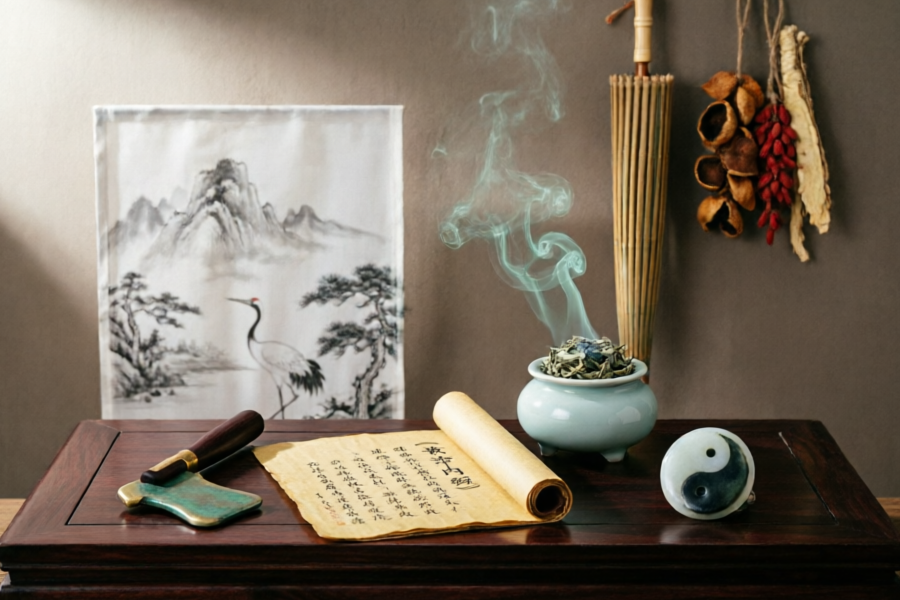
The theoretical foundation of traditional Chinese medicine health care is deeply rooted in traditional culture. For example, the "Huangdi Nei Jing" proposes that "preventing disease by applying force" is in line with the Taoist idea of "treating by doing nothing"; the Five Elements Theory corresponds the human body's internal organs to natural elements, embodying the Confucian view of "reaction between heaven and man". Zhang Zhongjing of the Han Dynasty emphasized "syndrome differentiation and treatment" in "Treatise on Febrile and Miscellaneous Diseases", and his thinking model was derived from the philosophy of change in the "Book of Changes". These theories not only guide the use of medicine, but also form a health-preserving level that "food therapy is not as good as qi therapy, and qi therapy is not as good as divine therapy", reflecting the outlook on life in traditional culture where body and spirit are unified.
Integration of health practices and traditional lifestyle
Traditional festivals are closely integrated with health-preserving practices, such as taking supplements during the Winter Solstice and wearing sachets to ward off evil spirits during the Dragon Boat Festival, all of which contain the wisdom of disease prevention. In terms of diet and health, Confucius's idea of "never getting tired of fine food, never getting tired of fine cooking" has developed into a culinary tradition with the same origin as medicinal food. The "Knocking on Teeth and Swallowing Liquid" method recorded by Sun Simiao in the Tang Dynasty in "Qianjin Prescription" is still a common method for keeping healthy in the morning. These practices integrate health care into daily life, giving health maintenance a sense of cultural ritual. For example, outing during the Qingming Festival not only conforms to the health law of "spring grows and summer grows", but also inherits the traditional value of closeness to nature.
The innovative inheritance of traditional health culture in modern society
The contemporary rediscovery of traditional health-preserving culture presents new features: Tai Chi has been scientifically proven to improve cardiopulmonary function; ancient prescriptions such as Liuwei Dihuang Pills included in the "Chinese Pharmacopoeia" have been standardized through enterprises such as Tongrentang. The following table shows some modern applications of traditional health methods:
| health regimen | modern applications | Manufacturing company |
|---|---|---|
| Moxibustion | Electronic moxibustion instrument | Qichun Li Shizhen Pharmaceutical Group |
| Baduanjin | Community fitness promotion | Compiled by the State Sports General Administration |
| Medicinal diet | Premade health soup packets | Guangzhou Baiyunshan Hutchison Whampoa |
The integration of traditional wisdom and modern health
As a living inheritance of traditional culture, TCM health preservation not only retains the temporal wisdom of "nourishing yang in spring and summer, and nourishing yin in autumn and winter", but also adapts to modern life through technological innovation. From the instruction of "Huainanzi" that "the sage emphasizes health maintenance" to the establishment of today's "preventive treatment" health management system, it reflects the continuation of cultural genes. This kind of integration is not a simple retrospect, but like the Ming Dynasty medical scientist Li Shizhen's "Compendium of Materia Medica", innovation in inheritance, so that thousands of years of health wisdom can continue to serve the health of modern people.
Quote sources:
1. "Huangdi Neijing" medical classics from the Warring States Period to the Han Dynasty
2. Sun Simiao's "A Thousand Gold Prescriptions", a medical work of the Tang Dynasty
3. Li Shizhen's "Compendium of Materia Medica", a medical monograph of the Ming Dynasty
4. Tongrentang Liuwei Dihuang Pills (National Drug Approval No. Z11020089)
5. Baiyunshan Hutchison Whampoa "Ganoderma Spore Oil Capsules" (Cantonese Food Health Certificate)
Relevant knowledge
- 2026-09-30How to maintain health during the hot summer?
- 2026-09-30How to maintain health during Xiaoshu?
- 2026-09-30How to maintain health during the summer solstice?
- 2026-09-29How to maintain the health of Eargrass?
- 2026-09-29How does Xiaoman maintain his health?
- 2026-09-29How to maintain health in Beginning of Summer?
- 2026-09-29How to maintain health during Guyu?
- 2026-09-28How to maintain health during Qingming Festival?
- 2026-09-28How to maintain health during the Spring Equinox?
- 2026-09-28How to maintain health in Jingzhe?
- 2026-09-28How to maintain health through rainwater?
- 2026-09-28How to maintain health at the beginning of spring?
- 2026-09-28What is the relationship between the twenty-four solar terms and health preservation?
- 2026-09-27How to prevent cold evil in winter?
- 2026-09-27How to take care of your emotions in winter?
- 2026-09-27What should you pay attention to when dressing in winter?
- 2026-09-26What should you pay attention to when sleeping in winter?
- 2026-09-26How to prevent cardiovascular and cerebrovascular diseases in winter?
Chinese medicinal materials
More-

View
The efficacy and function of Baiziren
Overview of the efficacy and functions of BaizirenBaiziren is the dried and mature seed kernel of Platycladus orientalis, a plant in the Cupressaceae family. Traditional Chinese medicine believes that it is flat in nature and sweet in taste, and can be used to regulate the heart, kidney, and large intestine meridians.Nourish the heart and calm the nerves, moisturize the intestines and relieve constipation, and nourish the liver and kidneysand other effects.Modern research shows that cypress seed
-

View
The efficacy and function of plum slices
Overview of the effects and functions of plum slicesPlum slices, also known as borneol or dipterocarp, is a traditional Chinese medicinal material that has the effects of rejuvenating the mind, clearing away heat and relieving pain, reducing swelling and promoting muscle growth.Its main component is dextroborneol, which is widely used in the fields of medicine, cosmetics and spices.The core functions of plum slices include relieving headaches, anti-inflammatory and sterilizing, promoting wound h
-

View
Efficacy and functions of Kochia bark
Overview of the efficacy and functions of Kochia barkKochia bark, also known as broom seedling, is a commonly used medicinal material in traditional Chinese medicine for clearing away heat and promoting dampness.Diuretic and relieve stranguria, dispel wind and relieve itching, clear away heat and detoxifyand other effects.It mainly acts on urinary system inflammation, skin itching and damp-heat jaundice, and is widely used clinically.Secondary functions include assisting in lowering blood sugar,
-

View
Efficacy and functions of Baiziren
Overview of the efficacy and functions of BaizirenBaiziren is the dried and mature seed kernel of Platycladus orientalis, a plant in the Cupressaceae family. Traditional Chinese medicine believes that it is flat in nature and sweet in taste, and can be used to regulate the heart, kidney, and large intestine meridians.Nourish the heart and calm the nerves, moisturize the intestines and relieve constipation, and nourish the liver and kidneysand other effects.Its main functions include improving sy
-

View
Eclipta Eclipta efficacy and functions
Overview of the efficacy and functions of EcliptaEclipta, also known as Eclipta or Eclipta, is a commonly used medicinal material in traditional Chinese medicine to nourish the liver and kidneys, cool blood and stop bleeding.Its core functions includeNourishes yin and nourishes kidney, blackens beard and hair, stops bleeding and reduces inflammation, the secondary effects involve improving hair loss, relieving gum bleeding and skin eczema.The primary and secondary structure is clear: liver and k
-

View
Function and role of hippocampus
Overview of the functions and functions of the hippocampusSeahorse is a precious marine creature recognized for its many benefits in both traditional medicine and modern research.Its main functions includeReplenishing kidneys and strengthening yang, anti-fatigue, regulating immunity, antioxidantetc., especially the effect of nourishing kidney and replenishing qi is the most prominent.In addition, the hippocampus also plays a certain role in improving blood circulation and relieving neurasthenia.
-

View
The effects and functions of fragrant fruit
Overview of the effects and functions of fragrant fruitXiangguo, also known as Ligusticum chuanxiong or Shannai, is a plant with both medicinal and edible value, and its rhizomes are often used in traditional Chinese medicine.Its main functions includePromotes blood circulation and removes blood stasis, dispels wind and relieves pain, improves blood circulation, the secondary effects involve relieving headaches, joint pain and women’s menstrual discomfort.The active ingredients of xiangguo, su
-

View
Efficacy and functions of Cistanche deserticola
Overview of the efficacy and functions of Cistanche deserticolaCistanche deserticola, also known as Cistanche deserticola, is a traditional Chinese medicinal material mainly produced in desert areas and is known as "desert ginseng".Its core functions includeReplenishing kidney yang, replenishing essence and blood, moistening intestines and laxative, the secondary effects involve anti-aging, regulating immunity, etc.This article will start from its medicinal value, suitable people, usage methods
-

View
White peony effect and function
Overview of the efficacy and functions of white peony rootWhite peony root is a commonly used blood-nourishing and menstrual-regulating medicine in traditional Chinese medicine.Nourishes blood and softens liver, relieves pain, astringes yin and stops sweatingIt has core functions such as irregular menstruation, hypochondriac pain, spontaneous sweating and night sweats.Its functions can be divided into two categories: primary and secondary:Main functionsIncluding regulating female endocrine, reli
-

View
Efficacy and functions of Wu Hua Xue Teng
Overview of the efficacy and functions of SpatholobusFive-flowered bloodvine is a traditional Chinese medicinal material, which mainly hasPromotes blood circulation and removes blood stasis, unblocks collaterals to relieve pain, expels wind and removes dampnessIt has other effects and is often used to treat rheumatic arthralgia, bruises and irregular menstruation.Its core function is to promote blood circulation, relieve inflammation and pain, and its secondary functions include assisting in reg
-
View
The efficacy and function of Tianqingdibai
Overview of the efficacy and functions of TianqingdibaiTianqing Dibai is a traditional Chinese medicinal material that has the effects of clearing heat and detoxifying, cooling blood and stopping bleeding, reducing swelling and dissipating stagnation. It is often used to treat sore throat, carbuncle sores, bruises and other diseases.Its main components include flavonoids, organic acids and other active substances. Modern research shows that it has certain anti-inflammatory and antibacterial effe
-
View
The efficacy and functions of wild buckwheat root
Overview of the efficacy and functions of wild buckwheat rootWild buckwheat root, also known as golden buckwheat, is a traditional Chinese medicinal material that has the functions of clearing heat and detoxifying, activating blood circulation and removing blood stasis, strengthening the spleen and digesting food.Modern research shows that it is rich in active ingredients such as flavonoids and phenolic acids, which has a certain auxiliary effect on respiratory infections, inflammation and diges